Why Costa Rica weather is more complicated than dry season vs. green season
If you've typed 'best time for a Costa Rica wedding' into Google, you've probably gotten something like 'Go in January. Avoid May.' That's not exactly wrong, but it leaves out enough context to point couples in the wrong direction.
Costa Rica has different climate zones, two coasts that don't follow the same weather pattern, and mountain regions that play by their own rules. The Pacific coast — Guanacaste, Papagayo, Manuel Antonio, the South Pacific — generally follows the standard dry-season/green-season pattern. The Caribbean side, around Puerto Viejo and Cahuita, does not; its drier months can fall in September and October, exactly when much of the Pacific side is wettest. Add the Central Valley, the mountains, and elevation changes, and a forecast for 'Costa Rica' is not automatically a forecast for your wedding venue.
I spend part of every year at my home in Alfombra, Pérez Zeledón, in the Talamanca foothills, and I can tell you 'rainy season' in one part of this country looks nothing like rainy season somewhere else. So: choose your region before you choose your month.
For the full picture of what a Costa Rica wedding actually involves, start with The Insider's Guide to a Destination Wedding in Costa Rica.
Costa Rica wedding weather month by month
Here's the month-by-month picture for the Pacific side, where most wedding resorts are:
| Month | Weather | What to know |
|---|---|---|
| December | Warm, drying out; still green early | Beautiful early/mid-month. Dec 20–early Jan is peak — flights spike, room blocks get hard. Book early. |
| January | Peak dry season, blue skies | The classic Guanacaste beach-wedding picture. Also peak pricing and demand. |
| February | Well-established dry season | Often the strongest month overall. Holiday crowds ease, weather stays excellent. |
| March | Dry season continues | Great for beach ceremonies. Spring break affects flights/pricing mid-month. Landscape turns golden. |
| April | Last full dry month; hot | Can be dusty and golden. Avoid Semana Santa (Easter Week) unless your venue is very private. |
| May | Green season begins | Afternoon showers, sunny mornings. Greener scenery without the wettest months. Better availability. |
| June–early July | Lush, fuller waterfalls | Richer photography color. Afternoon rain common — morning ceremonies and covered backups matter. |
| Mid-July–early Aug | The 'veranillo' (little summer) | A sometimes-drier stretch. Not guaranteed, varies by region — a calculated risk with green-season pricing. |
| August | Typical green season returns | Lush and beautiful, but clear-weather windows are less predictable. Not for outdoor-only events. |
| September–October | Wettest on the Pacific side | Needs strong contingency plans. BUT the Caribbean coast can be drier now — don't apply Guanacaste advice there. |
| November | Transition month | Rain tapering, landscape still full, rates more flexible than Dec–March. Late November can be excellent. |
What dry season and green season actually look like
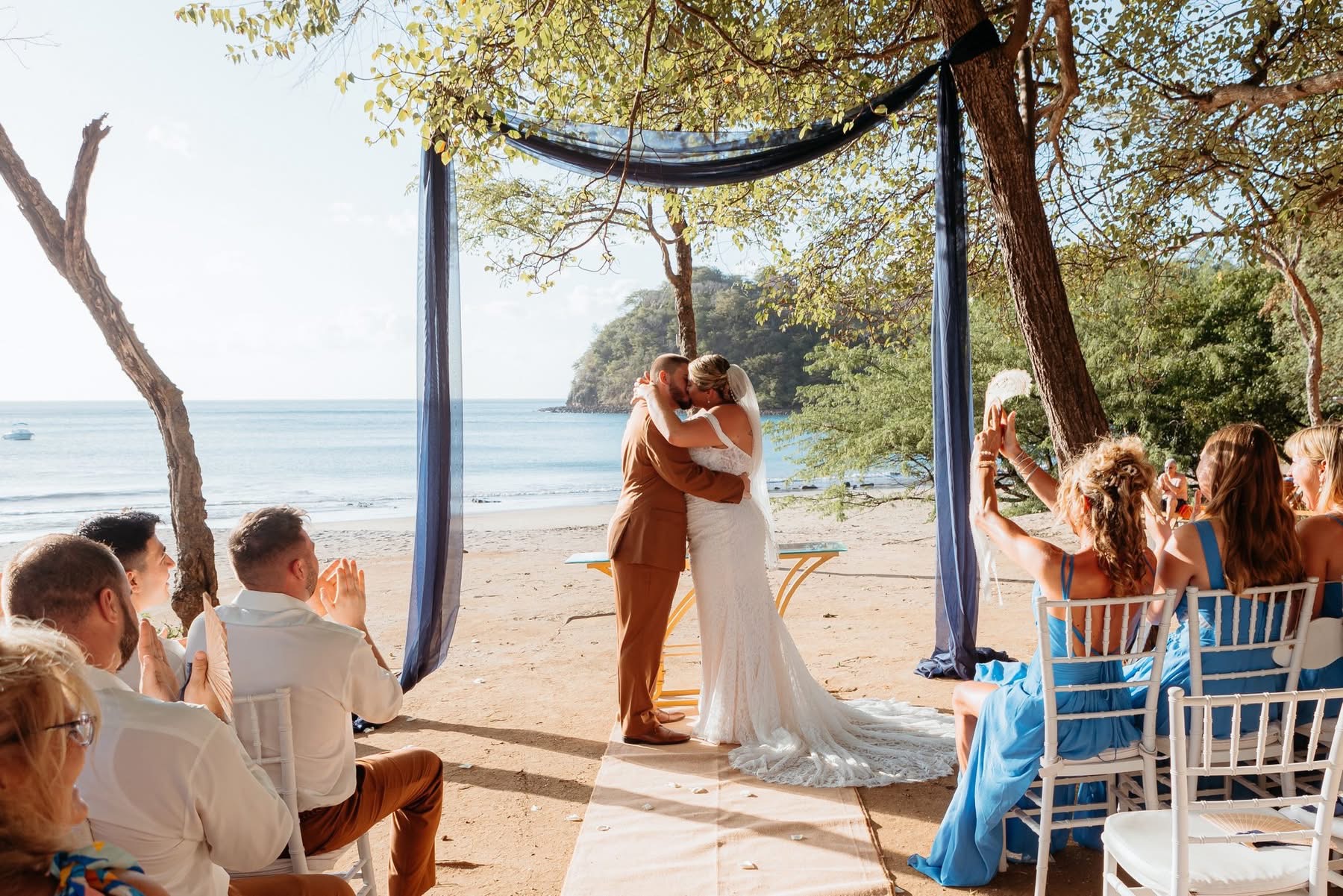
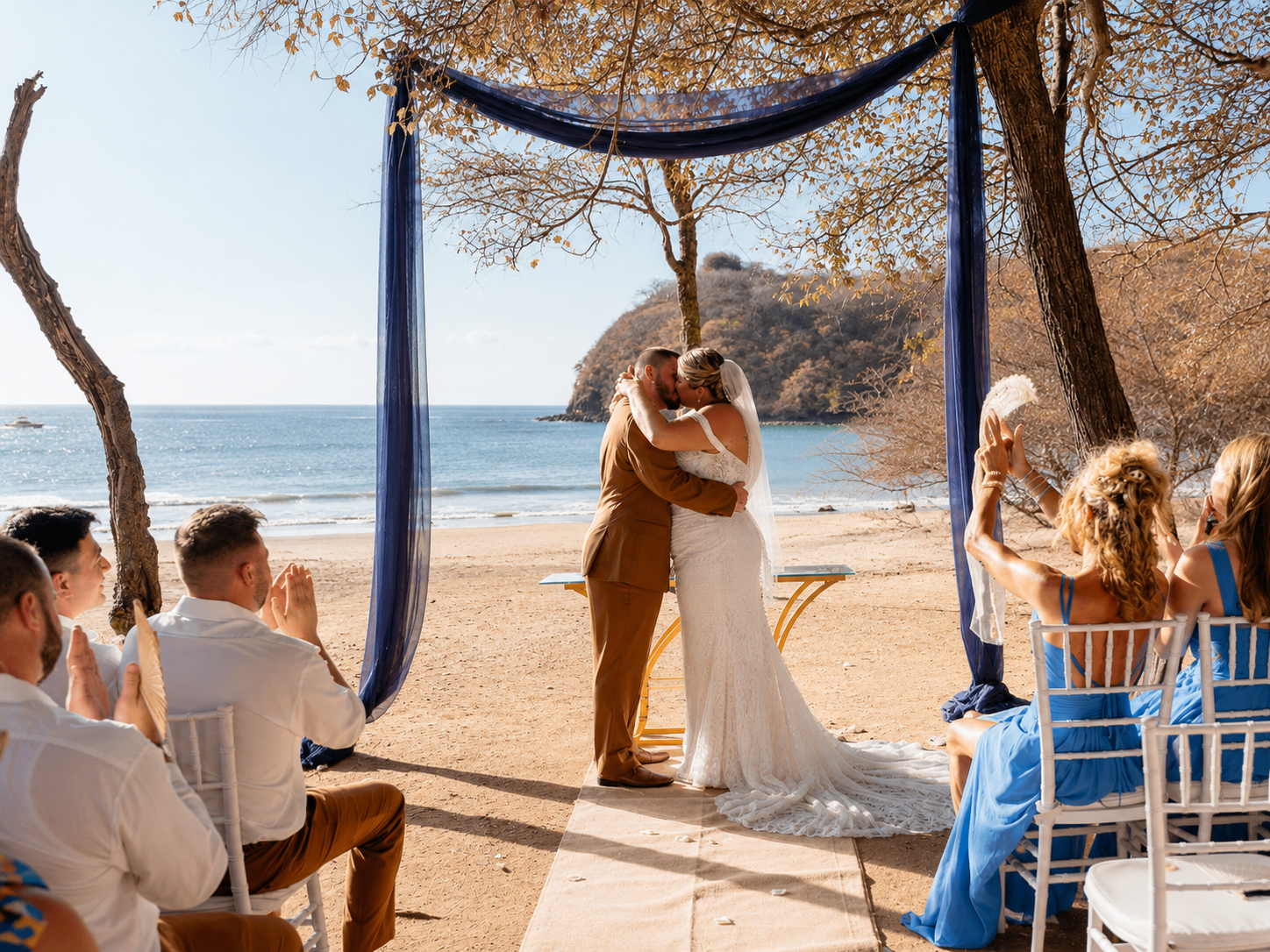
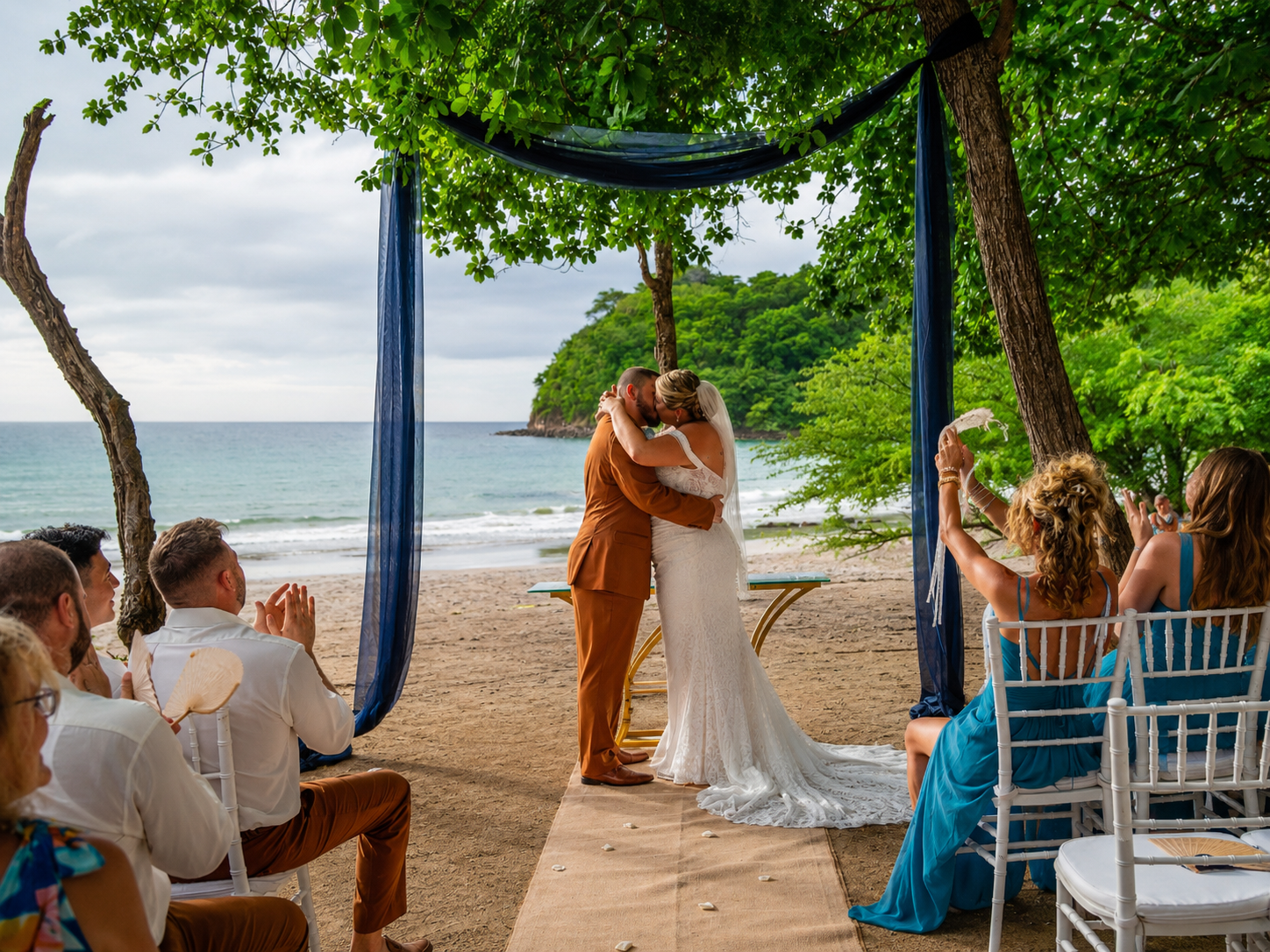
Dry season brings sunnier skies, lower humidity on the Pacific side, and easier conditions for outdoor ceremonies — but in Guanacaste it also means golden hills and drier grass, not the bright-green jungle many couples are picturing. Green season gets a worse reputation than it deserves: yes, rain is more likely and you need a real backup plan, but it's also when Costa Rica becomes lush and dramatic. Waterfalls fill. The jungle brightens. Flowers are everywhere. For a lot of couples, that's exactly the Costa Rica they wanted.
How the weather differs by region
Costa Rica's regions each have their own character — and their own weather rhythm:
| Region | Character | Best fit for |
|---|---|---|
| Guanacaste | Driest in dry season; golden landscape. Beach resorts, Pacific sunsets, easy access via Liberia | Resort-based beach weddings, larger groups, simpler guest logistics |
| Arenal & Northern Plains | Lush most of the year; mist, rainforest, hot springs. Volcano visible one minute, clouded the next | Couples who want drama and greenery, not guaranteed sunshine |
| Manuel Antonio & Central Pacific | Beach + rainforest + wildlife together. Green season especially lush | Smaller groups wanting an immersive wedding week |
| South Pacific | Lushest and most dramatic; green season really shows off | Couples wanting nature-forward, more private settings |
| Caribbean Coast | Runs on a different rhythm — can be drier in Sept/Oct when the Pacific is wettest | Couples willing to research their exact location rather than assume Pacific-side advice applies |
For a deeper regional breakdown of the three most popular Pacific-side options, see Guanacaste vs. Manuel Antonio vs. Arenal.
How elevation changes the experience
My home in Alfombra sits at about 2,100 feet, and the climate there is noticeably different from the coastal resorts — cooler, moodier, full of morning mist and afternoon clouds. Venues in the Central Valley, Turrialba, Monteverde, the cloud forest, or the mountains around Pérez Zeledón each have their own microclimates. The dry/green season logic still applies, but the experience changes: rain at elevation can feel softer and shorter than a coastal downpour, and the views after a passing shower can be worth the wait.
A story from my own backyard
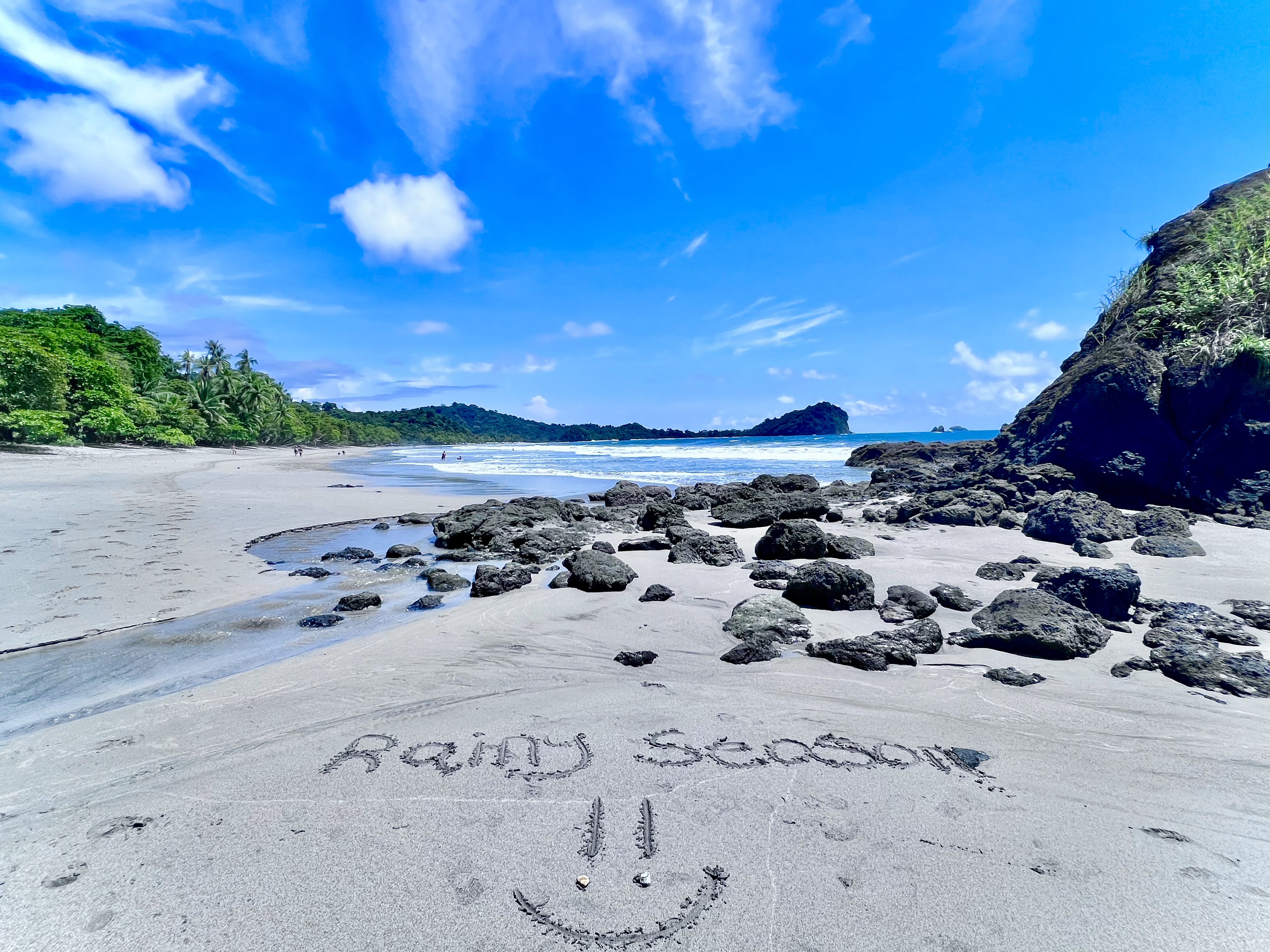
I was hosting guests at Bali Baru Hideaway in late October, deep into green season. We had four straight mornings of crystal-clear skies before noon. My guests had read all the usual 'avoid rainy season' advice and expected the worst — instead they spent their mornings by the infinity pool watching toucans in the tree line, and their afternoons watching clouds roll dramatically over the mountains. One of them told me it was the most beautiful weather she'd ever experienced. Not in spite of green season. Because of it.
Which month is best for a beach wedding vs. a rainforest wedding?
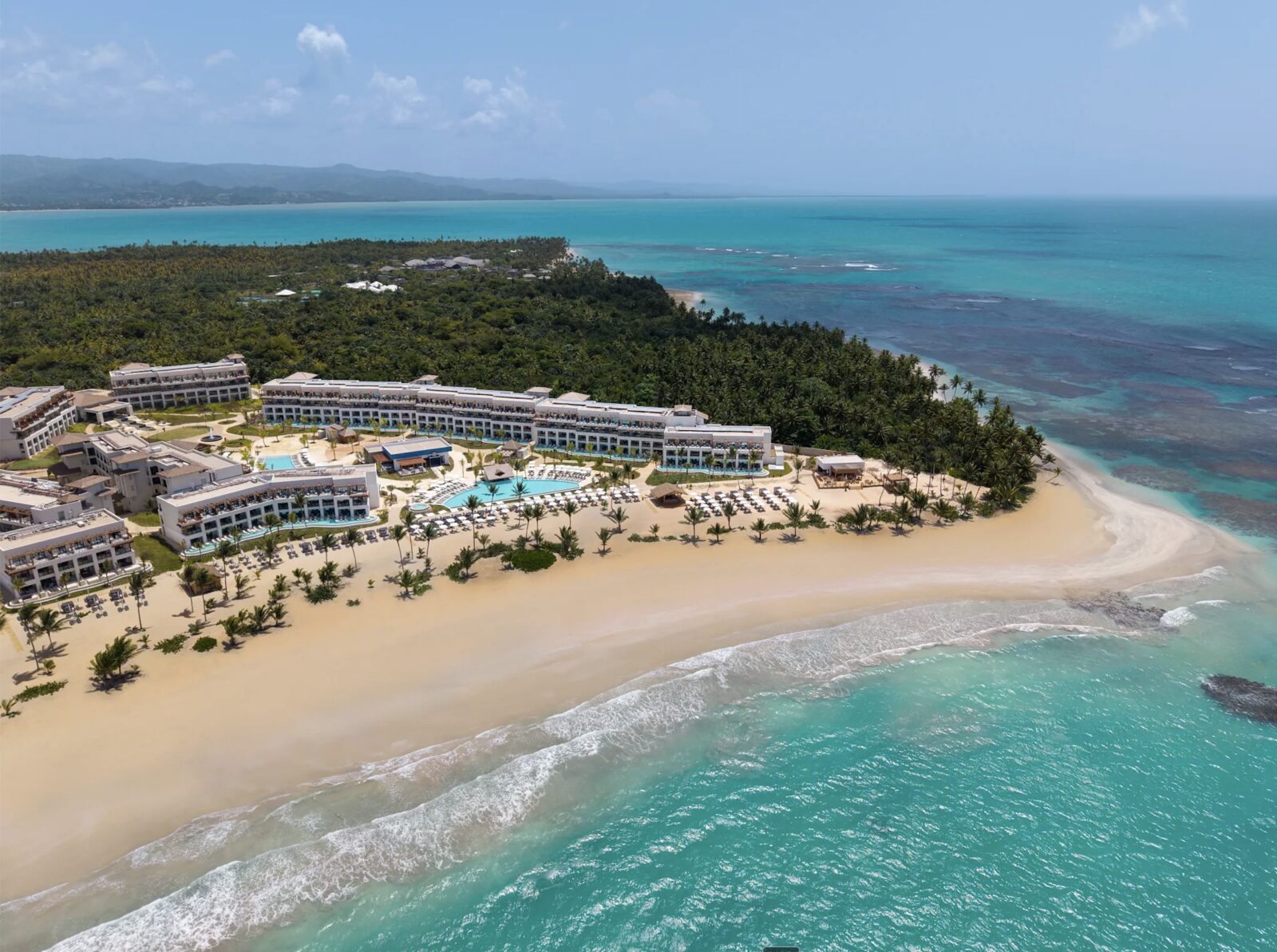
For a traditional beach wedding, most couples land on December through April, with Guanacaste the usual first stop. But beach weddings aren't only about rain — wind, heat, humidity, sunset timing, tides, beach access, and privacy all matter too. An ocean-view ceremony space doesn't always mean guests can walk onto soft sand, and a resort with a beach doesn't automatically have the water color or privacy you're picturing.
For a rainforest wedding — waterfalls, jungle, wildlife — green season is genuinely appealing, and May through November can be stunning in Arenal, the Central Pacific, the South Pacific, and inland mountain areas. That version needs a stronger weather plan: covered spaces, realistic transportation timing, and guests who understand a little rain comes with the scenery.
Your backup plan matters more than the forecast
The best Costa Rica wedding plan isn't the one that assumes rain won't happen — it's the one that still works if it does. A little rain isn't a problem when it's part of the plan. It becomes a problem when the venue's backup option turns out to be a sad conference room nobody asked to see before signing the contract.
Before booking, get clear answers on: where the ceremony moves to, whether you actually like that space, how fast the venue can make the switch, whether cocktail hour is protected, how guests move between spaces, whether covered transportation exists, what happens if rain starts mid-reception, whether the dance floor is covered, whether backup spaces cost extra, and when exactly the venue makes the weather call. Flexible is nice. Clear is kinder.
Shanna's Final Take
There isn't a wrong month to get married in Costa Rica — there's a wrong month for a specific venue, guest list, and tolerance for uncertainty. I've seen October deliver four perfect mornings in a row, and I've seen couples in 'perfect' March weather stuck with a golden, dried-out landscape they weren't expecting. Pick your region and venue first, then choose the month that fits what you actually want it to look and feel like.
Honest verdict
- Best for
- Couples flexible enough to choose their region first and let that drive the month — that order gets you a much better outcome than picking a date and hoping.
- Not ideal for
- Couples who want a guaranteed rain-free outdoor-only wedding with no covered backup. That guarantee doesn't exist here in any month.
- What I'd choose instead
- If you love the lush look but want better odds, aim for late November or May — green scenery, better pricing, and less rain risk than September or October.
Frequently asked
Is there a wrong time to get married in Costa Rica?
Not really — with the right venue and a realistic backup plan, every month offers something. That said, September and October on the Pacific side require the most planning around rain, transportation, and covered spaces.
What's the driest month in Costa Rica?
On the Pacific side, January through March are typically the driest and most reliably sunny. On the Caribbean side the pattern differs, with drier stretches sometimes falling in September and October.
Is green season cheaper for a Costa Rica wedding?
Often, yes — resort rates and group incentives can be more flexible outside peak dry season. Confirm current rates and room-block terms directly with your property, since these vary by resort and date.
What is the veranillo?
A sometimes-drier stretch between roughly mid-July and early August, nicknamed 'little summer.' It isn't guaranteed and doesn't occur the same way in every region, but when it arrives it can mean drier weather with green-season scenery and pricing.
Should we buy travel insurance for a green-season wedding?
It's worth pricing out. Coverage, exclusions, and weather-related terms vary significantly between policies — review the specifics with a licensed travel-insurance provider rather than assuming weather is covered.