Should you choose the resort or the venue first for a destination wedding?
For most couples I plan for, the answer is: choose the resort first. It's the path with fewer contracts, fewer vendor logistics, and fewer weather-day surprises — and for a destination wedding where 40 to 80 guests are flying in, that simplicity is worth a lot. But it's not the right answer for everyone. Some couples have a very specific ceremony setting in their head that no resort can quite match, and for them, venue-first is the honest starting point, even if it's more work.
The mistake I watch couples make isn't picking the wrong path. It's picking one without ever really deciding which one they're on. They start browsing resorts, fall in love with a standalone hacienda they saw on Pinterest, half-book the resort anyway, and end up trying to force two different visions into one wedding. So before you compare a single quote, pin down what's actually driving the decision — convenience, budget, or setting — and let that answer point you at resort-first or venue-first.
When should you choose the resort first?
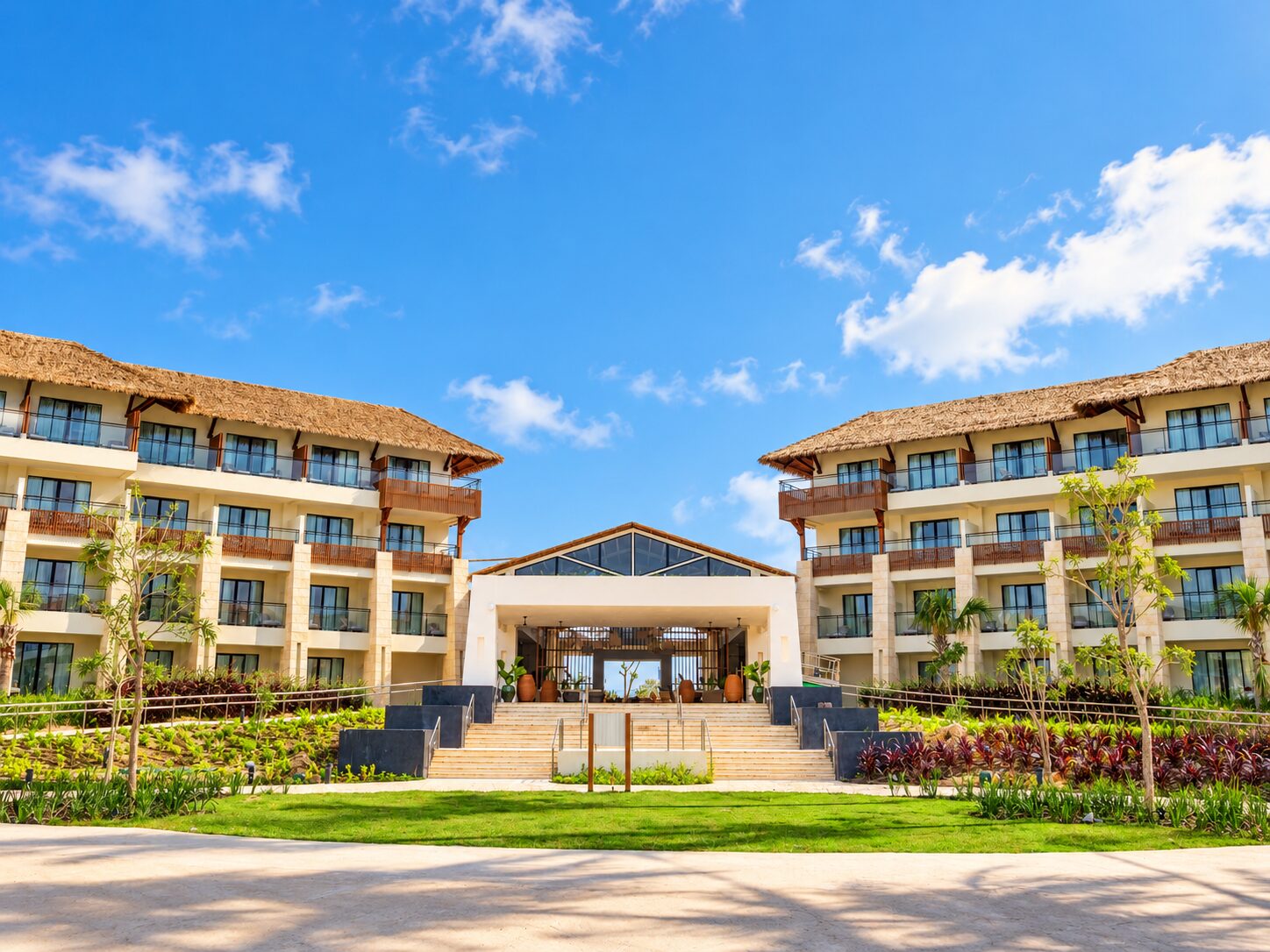
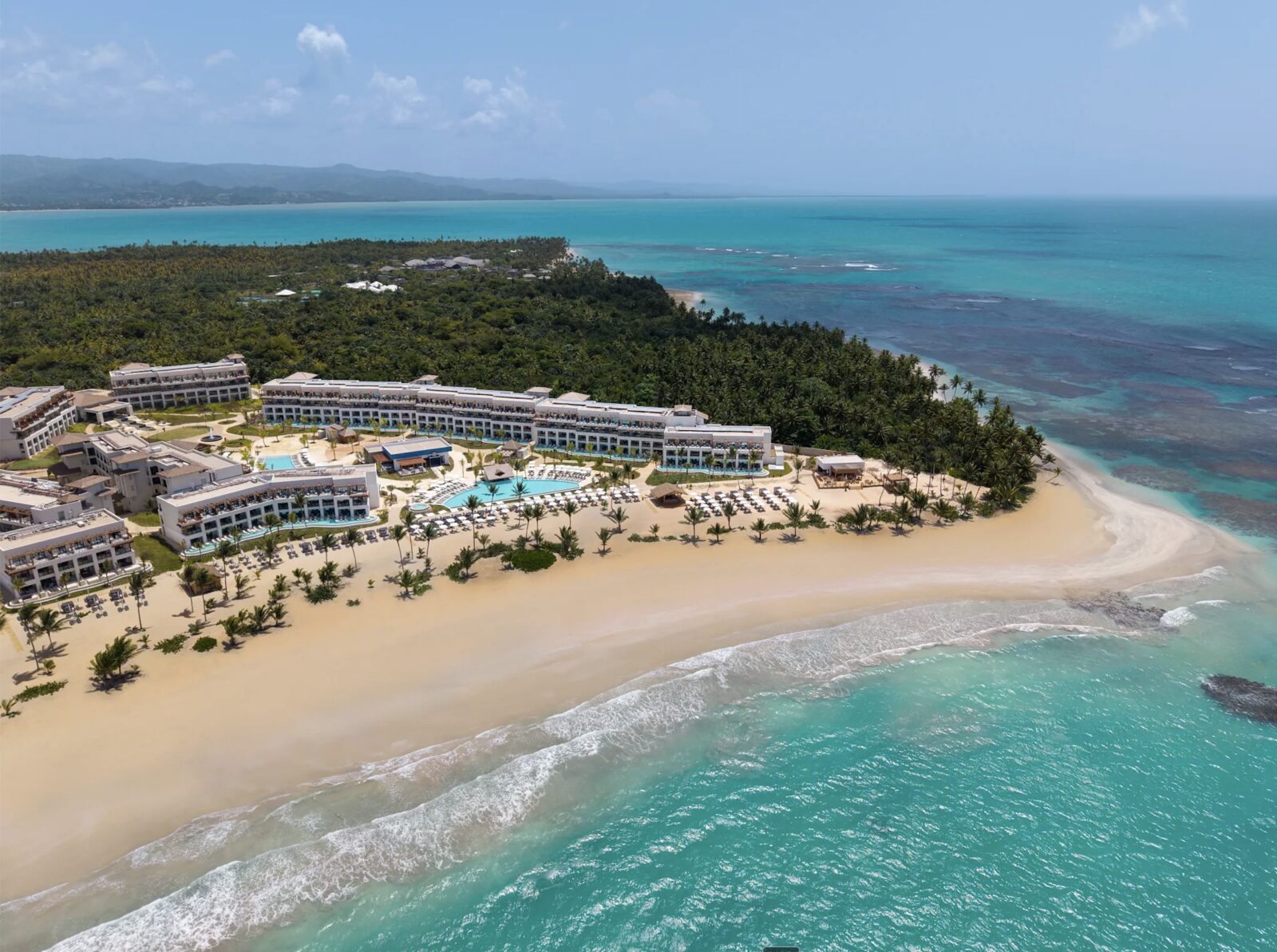
Choose the resort first when your top priorities are guest experience, straightforward logistics, and a predictable budget. All-inclusive resorts are built for this. One contract covers your guest rooms, meals, ceremony space, reception venue, a wedding coordinator, and usually a base package of florals, décor, officiant, and cake. Everyone flies in, checks into one place, and the entire week — welcome party, rehearsal dinner, ceremony, reception, farewell brunch — happens inside a single property with the same staff supporting all of it.
This is the path that lets your guests genuinely vacation. They don't rent cars, they don't taxi between properties, they don't hunt down dinner reservations in a town they've never been to. They put on a wristband, and they're at your wedding. For a large or mixed-generation guest list — parents, grandparents, kids, friends from three states — that ease is usually the difference between people coming and people declining.

What are the biggest advantages of a resort-first destination wedding?
Once you've committed to a resort, the wedding gets dramatically easier to plan, and the trade-offs are almost all logistical rather than aesthetic. Here's what you actually get:
- One contract, one coordinator: everything from your ceremony chairs to your reception dinner menu lives in a single agreement with a single point of contact. You are not managing seven vendors from another country.
- Bundled wedding packages: most all-inclusives offer tiered packages that fold in the officiant, floral arch, ceremony chairs, PA system, cake, sparkling toast, and a private reception dinner. You can add on, but the baseline is already covered.
- Simpler guest logistics: guests stay, eat, drink, and celebrate in one place. No transportation between the ceremony site and the reception. No shuttle contracts. No "where's the after-party?" questions.
- Predictable per-guest cost: because rooms, meals, and drinks are bundled into the all-inclusive rate, guests know what the trip will cost them up front — which is a huge deal for RSVPs and attendance.
- Built-in Plan B: every reputable resort wedding department has an indoor backup for outdoor ceremonies, a rain-day playbook, and staff who run this exact type of event weekly.
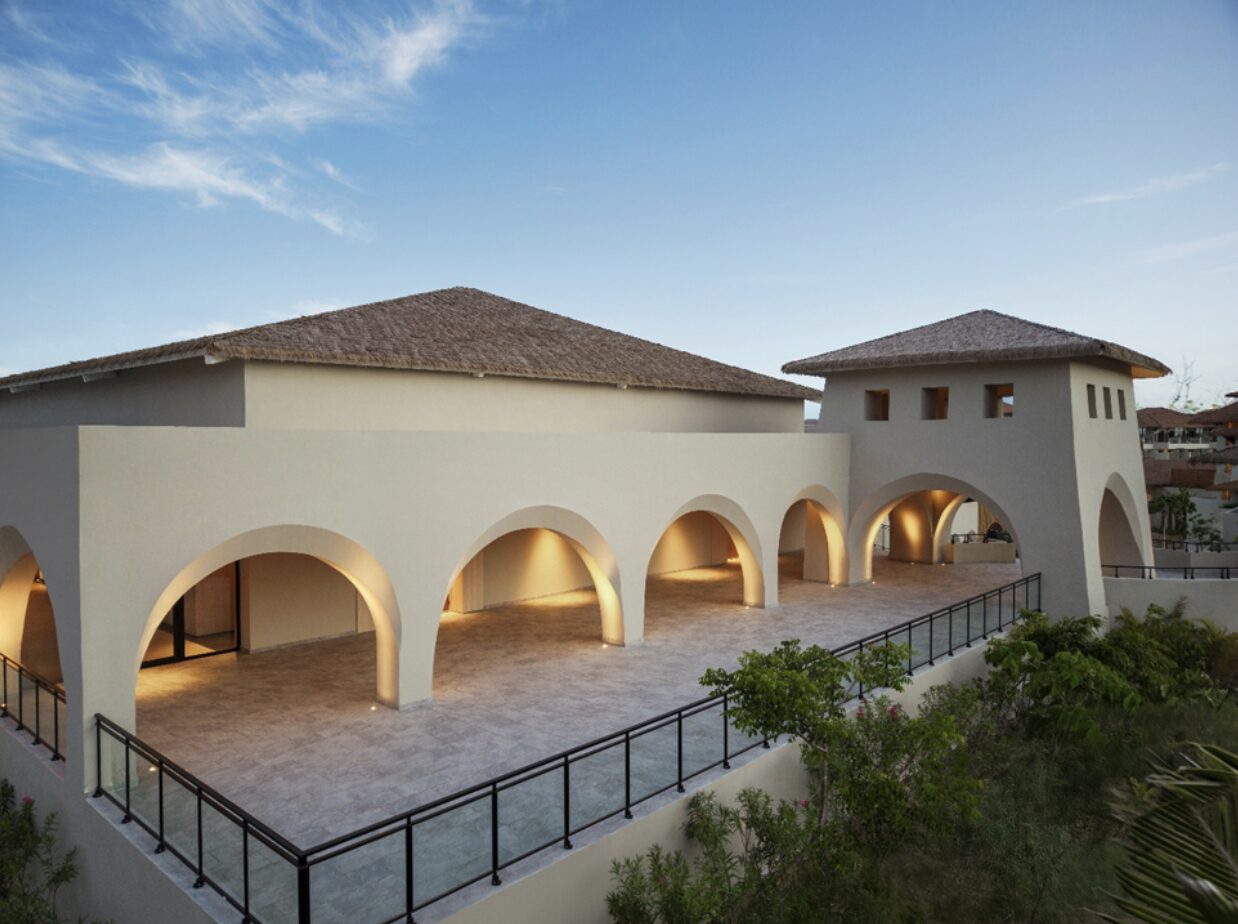
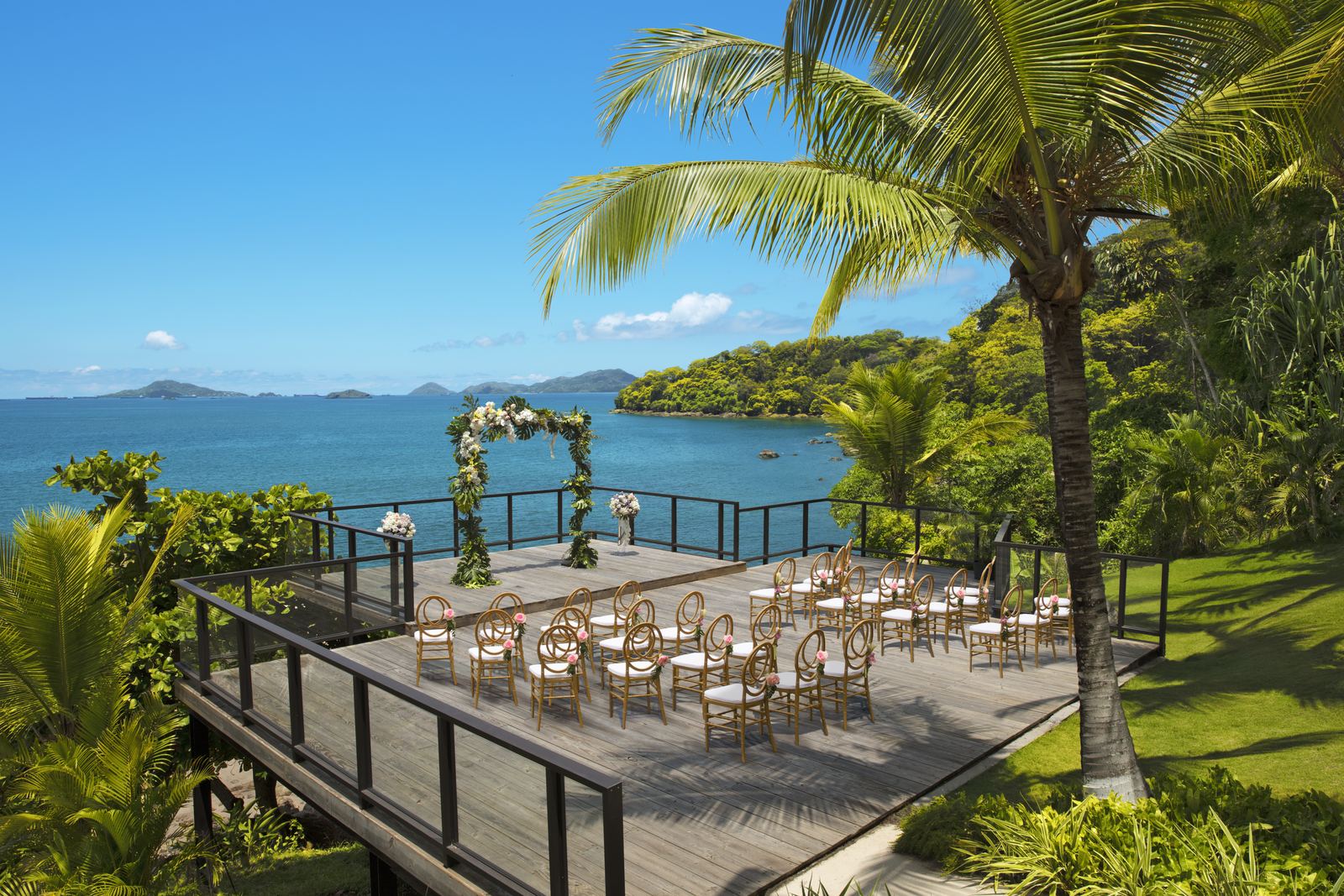
The honest caveat: resorts can limit your ceremony options. If your dream is a specific standalone chapel, a public cliffside overlook, or a colonial-town hacienda that isn't affiliated with a resort, going resort-first will constrain those choices. Most couples find that a great resort has enough on-property variety — beachfront gazebo, garden setting, rooftop terrace, chapel — to cover their vision. But if your vision is genuinely tied to a specific off-resort setting, resort-first is the wrong entry point.
When should you choose the venue first instead?
Choose the venue first when the setting is the wedding. If you can't picture your ceremony anywhere except a particular cliffside, a specific botanical garden, a colonial chapel in a specific town, or a private estate you've already seen — start with the venue. Then find the right resort nearby for your guest block, arrange transportation, and build the rest of the day around that anchor.
Venue-first weddings look and feel more custom, because they are. You're not choosing from a menu of on-property ceremony spots — you're renting a space that exists to host events, hiring the caterer, contracting the florist, booking the officiant, coordinating the transportation, and hiring a local wedding planner to orchestrate the day. The result can be genuinely one-of-a-kind. The trade-off is that everything you'd get in a bundled resort package becomes its own contract, timeline, and payment.
What are the biggest advantages of a venue-first destination wedding?
When the setting genuinely matters to you, venue-first delivers what resort-first can't. Here's what you're actually buying with the extra complexity:
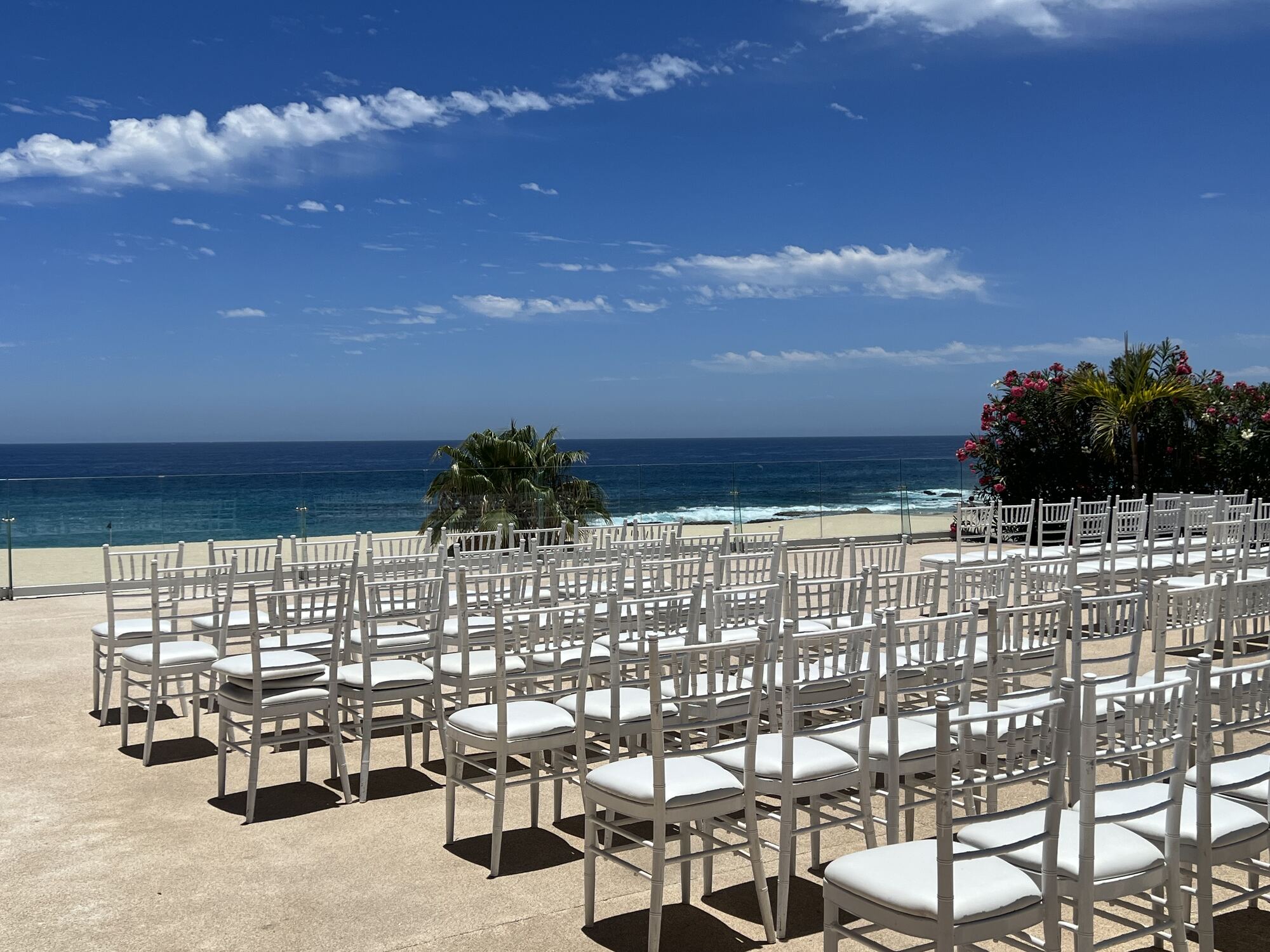
- Ambiance you can't manufacture: a private hacienda courtyard, a cliffside villa, a botanical garden, or a heritage chapel carries an atmosphere the resort ballroom next door will never match. If the setting is what makes the wedding feel like *your* wedding, this is where it comes from.
- Design freedom: you're not working from a resort's approved décor list, preferred florist, or in-house catering menu. You choose every vendor, every menu, every rental piece. That control is real and can produce photos that don't look like any other destination wedding on the internet.
- A clear organizing principle: once the venue is locked, every subsequent decision — palette, formality, guest count, transportation, even the resort you house guests at — flows from that anchor. The wedding acquires an identity earlier.
- Off-resort authenticity: for couples who don't want their wedding to feel like a resort event, venue-first is the way to get a true sense of place, whether that's a town square, a mountain estate, or a private villa.
The honest caveat: venue-first is more expensive, more logistically complex, and more work for you and your planner. You're paying separately for venue rental, catering, staff, rentals (tables, chairs, glassware, linens), lighting, sound, transportation for guests between the resort and the venue, and often a local wedding planner to run the day. Costs that would be baked into an all-inclusive resort package show up as separate line items — and add up.
Can you combine resort and venue for a destination wedding?
Yes — and honestly, this is what most of my venue-first couples actually end up doing. It's rarely a pure either/or. The two most common blends I see work beautifully:
Standalone venue with a nearby resort room block. You love a specific ceremony site — a cliffside villa, a boutique hotel with a stunning terrace, a private hacienda. You book that venue for the ceremony and reception, and then negotiate a group room block at a nearby all-inclusive resort for your guests. Guests still get the resort ease for their lodging, meals, and downtime, and you get the ceremony setting you couldn't compromise on. Transportation between the two is a real cost line, but it's manageable when planned early.
Resort wedding with a signature off-property event. You go resort-first for the ceremony, reception, and guest housing, and then plan one memorable off-property event — a welcome dinner at a rooftop restaurant in town, a rehearsal-dinner catamaran cruise, a farewell brunch at a beach club. You get the logistical simplicity of an all-inclusive for the wedding itself, plus one "of this place" moment that gives the trip texture.
A good destination wedding travel advisor can price out both configurations side by side, flag the vendor rules and outside-vendor fees that resorts often charge, and tell you honestly which blend is going to feel more like the wedding you actually want.
How much does a resort-first wedding cost vs. a venue-first wedding?
The short version: resort-first is almost always meaningfully less expensive per guest than venue-first for the same guest count and quality tier, largely because so much is bundled and staff is already on payroll for your date. A venue-first wedding at a private estate or standalone venue typically adds 20–40% to the overall wedding-day production budget once you account for venue rental, off-resort catering, full rentals, transportation, and a separate local planner. That's not a reason to avoid venue-first — the setting can absolutely be worth it — but it's a reason to know what you're signing up for before you fall in love with a specific venue.
For a full walk-through of what a destination wedding actually costs, see how much does a destination wedding cost and the follow-up on hidden costs couples don't see coming.
How do you decide between resort-first and venue-first?
Three quick questions get most couples to a real answer:
- What matters most: convenience, budget, or ambiance? If it's convenience or budget, go resort-first. If it's ambiance and a specific setting, start venue-first and expect the extra complexity.
- Can you name a specific venue you cannot live without? If yes, and it's not on a resort — venue-first. If no, or if you're picturing "a beach" or "a garden" generically — resort-first delivers all of those inside one contract.
- Who is your guest list, and how much lift can you ask of them? Older parents, guests traveling internationally for the first time, families with kids — those groups thrive at an all-inclusive resort. A younger, more well-traveled guest list will happily transfer between a venue and a resort for one great party.
Once you've answered those three, put resorts and venues side by side with real numbers — package inclusions, guest per-night cost, outside vendor fees, transportation, and any "gotcha" line items like ceremony setup fees or private reception dinner minimums. That comparison is exactly the conversation I have on a free consultation call, and it usually takes about 30 minutes to know which path is right for a given couple. If you want help running that comparison for your wedding, see the framework I use for choosing a destination wedding planner.
Shanna's Final Take
Whether you go resort-first or venue-first, the wedding that feels the best on the day is the one where the couple made the choice on purpose. Not by drift. Not by falling in love with a photo without pricing the surrounding logistics. On purpose — knowing what you were optimizing for and what you were trading away.
For most couples I plan for, resort-first is the honest, low-stress answer, and the ceremony spaces inside good all-inclusives are genuinely beautiful. For a smaller group of couples with a very specific setting that only a standalone venue can deliver, venue-first is worth the extra work — with a resort room block bolted on so guests still get the ease. Either way, you'll end up with a celebration that reflects your love story and gives your guests a trip they'll talk about for years.
Honest verdict
- Best for
- Resort-first: couples who want simple logistics, predictable per-guest cost, and a coordinator handling every detail on-property. Venue-first: couples with a specific, non-negotiable ceremony setting who are willing to trade complexity and cost for design freedom.
- Not ideal for
- Trying to split the difference without a plan — half-booking a resort while still shopping standalone venues, or committing to a venue without pricing the surrounding logistics and guest housing. That's where couples pay for both paths and enjoy neither.
- What I'd choose instead
- If you're torn, default to a resort with strong on-property ceremony options plus one off-property signature event (a welcome dinner, a catamaran night, a farewell brunch). That combo gets you the ease of an all-inclusive and one true "of this place" moment without the venue-first budget lift.
Frequently asked
Should you book the resort or the wedding venue first?
For most couples, book the resort first. All-inclusive resorts bundle ceremony space, reception venue, coordinator, guest rooms, meals, and often a base package of florals and décor into a single contract, which is the fastest and lowest-stress path to a destination wedding. Book the venue first only if a specific setting — a particular chapel, private estate, cliffside, or garden — is genuinely essential to your vision and no resort ceremony space would satisfy it. In that case, you'll build catering, décor, transportation, and guest lodging around the venue, typically with a nearby resort holding a room block for your guests.
Is a resort-based destination wedding cheaper than a standalone venue?
Yes, usually meaningfully cheaper per guest at the same quality tier. Because rooms, meals, drinks, ceremony space, reception venue, and much of the wedding package are bundled into the all-inclusive rate, resort weddings avoid the separate line items — venue rental, off-property catering, full rentals, transportation between sites, and a local day-of planner — that stack up on venue-first weddings. A standalone-venue destination wedding typically runs 20–40% higher in overall wedding-day production budget for the same guest count. That's not automatically a reason to avoid it — the setting can be worth the difference — but it's worth pricing both configurations side by side before committing.
Can you have your destination wedding ceremony at one location and reception at another?
Yes, and it's a common and beautiful way to blend the two approaches. Couples often hold the ceremony at a standalone venue — a chapel, a private estate, a rooftop with a specific view — and then bus guests to a nearby all-inclusive resort for the reception, or vice versa. The keys are budgeting for the transportation contract (usually shuttles or coaches with a coordinator on board), locking down timing so guests aren't stuck in transit at sunset, and giving guests a written schedule with pickup times, dress-code notes, and where their evening ends up. A destination wedding planner or travel advisor can price the transportation and coordinate timing so the split doesn't feel disjointed.
What questions should you ask a venue coordinator before booking?
Ask, in writing: exactly what the venue rental fee includes and excludes, the ceremony and reception time slots available on your date, noise curfews and amplified-music cutoffs, indoor backup space for weather, outside vendor policies and per-vendor fees, minimum guest counts, service and gratuity structure, and how the vendor list is managed (are you required to use in-house catering and florists, or can you bring your own?). Also ask for a real weather track record for your target month and who your primary on-site contact will be from booking through the wedding day. "We'll figure it out closer to the date" is not an acceptable answer to any of those.
Why should you use a destination wedding planner or travel advisor for either approach?
Because whether you go resort-first or venue-first, the trade-offs are in the fine print — outside vendor fees, ceremony setup charges, private reception dinner minimums, transportation contracts, and group room-block terms — and a good destination wedding planner has seen them all before. On the resort side, they negotiate the group block, unlock perks and preview stays, and know which properties actually deliver on their marketing. On the venue side, they source local vendors, coordinate the interlocking contracts, and run the day-of logistics you can't run from another country. Either way, they're a fixed-fee investment that usually pays for itself several times over in avoided mistakes.