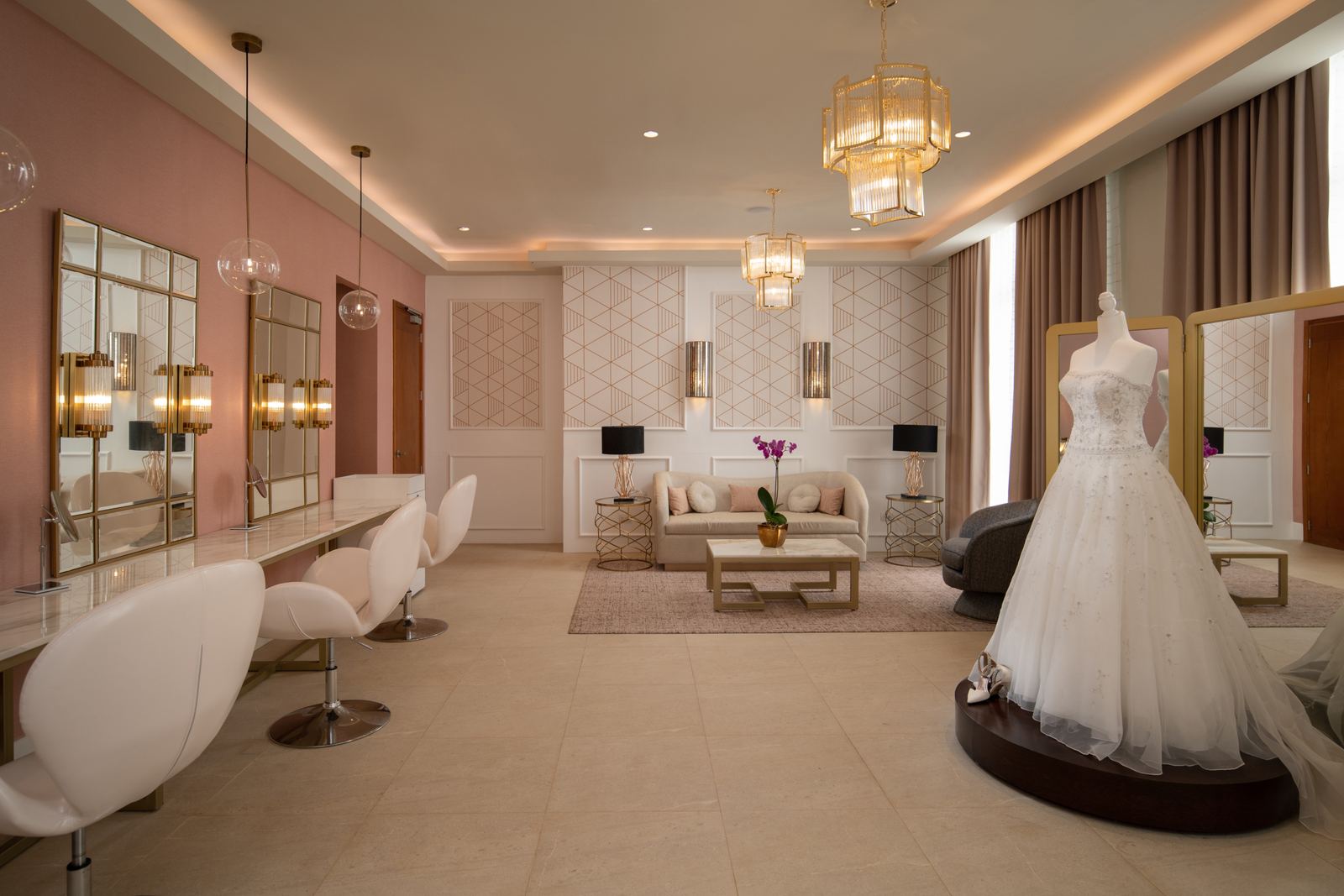
Why do the questions you ask a venue coordinator matter so much for a destination wedding?
Planning a wedding abroad is exciting. It's also the single biggest travel-and-events project most couples ever coordinate remotely — which means the venue coordinator on the other end of the email chain becomes, in practice, the person who determines whether your wedding weekend runs smoothly or unravels in the final week. The venue sets the mood, shapes your guests' experience, and drives the timeline every other vendor plans against.
The questions in this post aren't about being difficult with a coordinator or building an adversarial dynamic. They're about surfacing the things that most often go sideways on international destination weddings, so you can catch them at the contract stage — when everything is still negotiable — instead of a week before your travel date, when nothing is. Every question below comes from a real category of problem I've seen show up on weddings I've helped fix or salvage over the years.
Treat this as a checklist. Copy the questions into an email or bring them to your first video call, and don't sign anything until you have clear written answers on every one of them.
Is your wedding date actually locked in after the deposit is paid?
This is the single most important question, and it's the one couples most often assume the answer to instead of asking directly.
At many international venues, a deposit is exactly that: a deposit against a booking — not a guaranteed date-hold. There are venues, particularly in high-demand Caribbean and Mexican markets, where a coordinator will accept a deposit from you and continue quoting your date to another couple, and whichever contract lands first at full signature wins. That is not the deal you think you're making when you wire the money.
The fix is straightforward: ask the coordinator, in writing, to confirm three specific things. First, that the date is fully removed from availability the moment your deposit is received. Second, that no other party can hold or contract that date while your deposit is on file. Third, what the refund policy is if the venue later tries to reassign your date — the answer should be a full refund plus a documented remedy, not a credit toward a different date.
If a coordinator resists putting those three points in writing, that's your answer. Move to the next venue on the list. A venue that won't guarantee your date is a venue that is telling you, quietly, that your wedding is a placeholder until a bigger booking calls in.
How many weddings does the venue host per day — and will yours share the property?
This question separates a venue that treats your wedding as the day's headline event from one that treats it as one of three overlapping bookings the staff has to juggle.
Large all-inclusive resorts and cruise-adjacent properties routinely host multiple weddings on the same date, sometimes at different ceremony sites on the same beach, sometimes in overlapping reception spaces with a shared kitchen and coordinator pool. When that's the case, the staff isn't stretched thin because they're bad at their job — they're stretched thin because the resort has sold the day three times. Your cocktail hour ends up rushed because the space needs to flip for the wedding after yours. Your coordinator disappears for 40 minutes because they're triaging another couple's vendor delivery. Your ceremony start slips 20 minutes because the beach setup crew is still tearing down the wedding before yours.
Ask directly: how many weddings are booked on our date? At what ceremony sites and reception venues? Who is the single point of contact for our wedding on the day, and what other weddings is that person also covering? Are staff, catering, and coordination resources shared or dedicated?
If privacy and undivided attention matter to you, look for venues that guarantee one wedding per day or explicitly reserve a dedicated coordinator, catering team, and setup crew for each wedding. Some resorts sell this as a premium tier; others do it by default and won't oversell the date. Either is fine — what matters is that you know the answer before you sign.
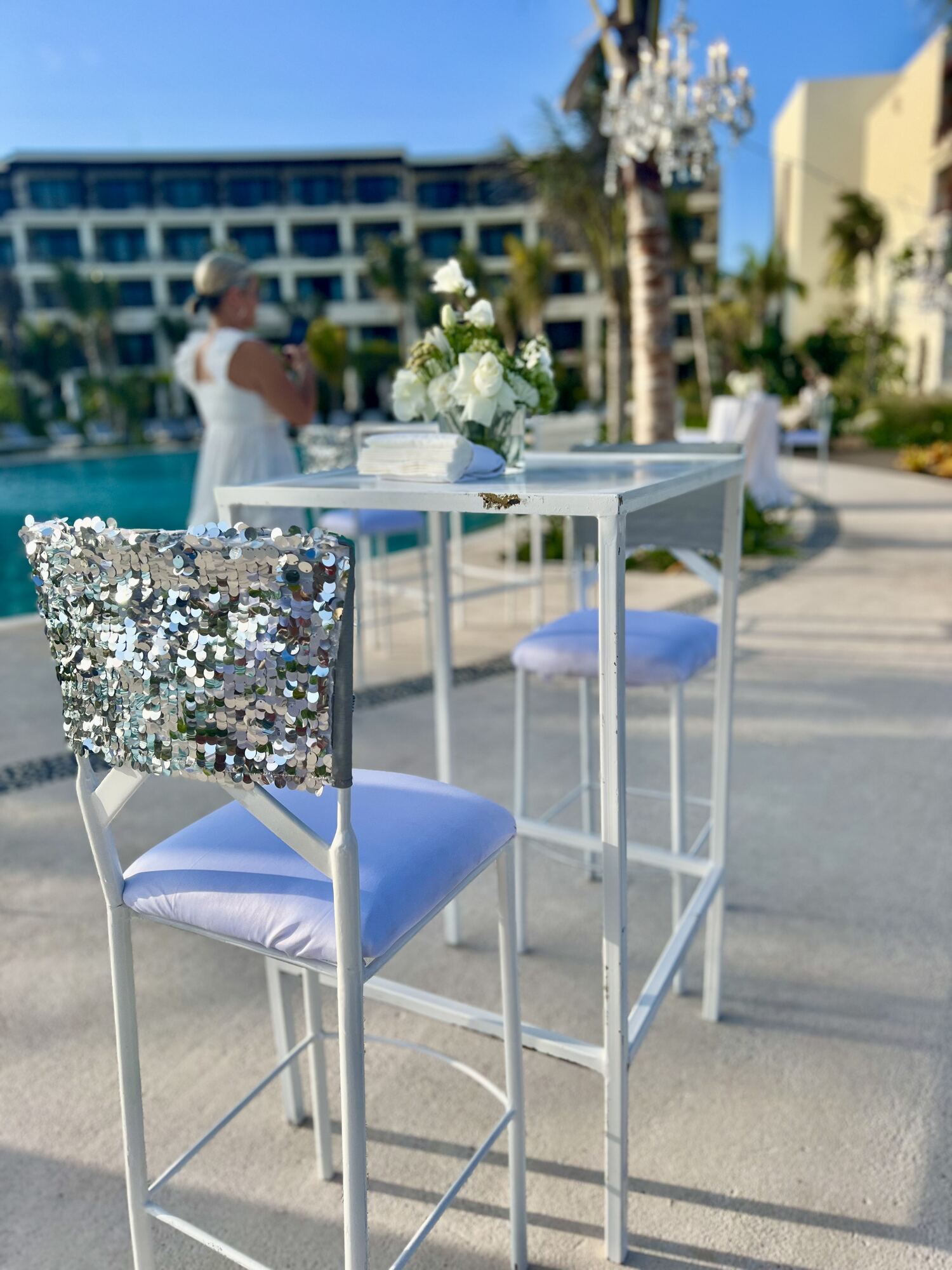
What is the weather and emergency backup plan — and is the backup space reserved for you?
Every outdoor destination wedding needs a real weather backup plan. Rain, high wind, coastal storms, and — depending on the region — hurricane-season weather patterns aren't hypothetical risks; they're variables you plan against. The question isn't whether the venue has a backup space. The question is whether that backup space is contractually reserved for your wedding, and who makes the call to move.
Ask the coordinator: what is the specific backup location for the ceremony? For the reception? Is it reserved for us on our date, or is it a shared indoor space that could already be booked for another event? How far in advance of the ceremony is the call-to-move made, and by whom? Is there any additional fee to invoke the backup plan?
The failure mode here is a coordinator who says, cheerfully, that of course there's a backup — usually the ballroom or a covered terrace — without confirming it's actually held for you. Then a tropical storm rolls in on your date, another wedding on the property gets there first, and you're either scrambling to relocate to an inferior space or holding the ceremony under an active weather warning because you have no protected alternative. This happens more than it should, and it's entirely preventable by asking two clear questions at contract time.
The other piece of this is guest communication. Ask the coordinator how the call-to-move is communicated to your travel party — is it managed by the venue, by your travel advisor, by your planner? A backup plan that no one can trigger cleanly on the day is not much of a plan.
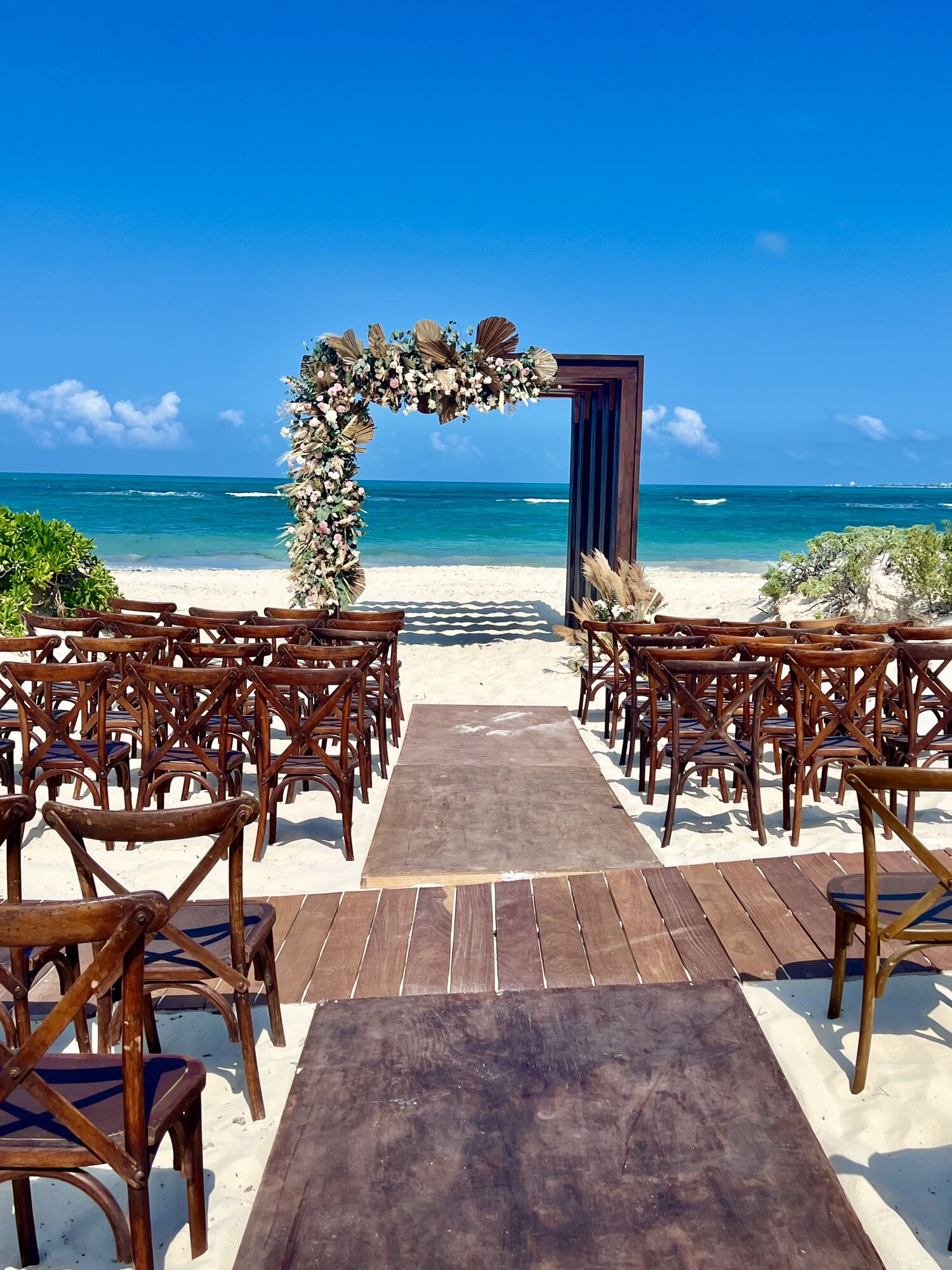
How does the venue protect your privacy at a busy resort or hotel property?
Privacy is a genuine tension point at large resort weddings. The property is, in most cases, also full of vacation guests — families at the pool, couples at the swim-up bar, groups on the beach — and your ceremony and reception are happening inside that ecosystem.
Ask specifically: how do you prevent non-wedding guests from crossing into our ceremony or reception space? Is there a physical barrier — velvet ropes, staff-monitored boundary, a sectioned beach area — or is the boundary purely staff enforcement? Where are the shared spaces closest to our venues, and what does the coordinator do if a hotel guest wanders in? What time does the reception space become fully private versus shared?
There's no single right answer — some couples love a lively, celebratory resort backdrop and don't mind an unrelated guest cheering the ceremony from a nearby pool; others want a firmly private, invited-guests-only feel from the first vow to the last dance. Either preference is valid, but the coordinator needs to know which one you're asking for, and the answer needs to match your contract.
Signature red flag on this question: a coordinator who says, in effect, that they can't fully control non-wedding guests but assures you it won't be a problem. Push back until you get a concrete answer about the specific boundary system on your specific ceremony and reception sites.
Watch: a quick reminder of what actually matters in the coordinator conversation
Before we dig into the next set of questions — outside vendors, curfews, site-fee inclusions, and the fine print — here's a short reminder of the underlying frame every one of these questions is pressure-testing.
What is the outside-vendor policy — and are there fees for bringing in your own photographer, florist, or planner?
Almost every international resort venue has a policy on outside vendors, and the policy has real budget consequences. The three most common structures are: preferred-vendor-only (you must use the venue's list), preferred-vendors-plus-outside (outside vendors are allowed but only with an approval fee, a day pass, or a per-vendor surcharge), and fully open (outside vendors are welcome without a fee, subject to basic insurance and setup rules).
Ask the coordinator, in writing, which structure applies. Then ask the fee amounts specifically: what is the outside-photographer fee per person, per day, or per event? What about outside videographer, florist, DJ, planner, hair-and-makeup? What is included as a day pass — access hours, meals, transportation? What insurance certificates are required, and what is the deadline for submitting them?
This matters most for couples who are bringing a photographer or planner from home, or working with an independent destination planner they've already retained. A $500-per-day photographer surcharge across a three-day shoot is real money, and it's the kind of number that often doesn't appear until the final invoice unless you ask for it up front.
If you're still choosing between a resort planner and an independent destination wedding planner, this is one of the specific questions I'd bring into the conversation — the outside-vendor policy is often the piece that tips the math one way or the other. This guide on choosing a destination wedding planner walks through the trade-offs.
What are the noise curfews and sound ordinances at the venue?
International destination wedding venues almost always have a music curfew, and the curfew is set by local ordinance more often than by the venue's preference. Ceremonies and receptions on public-beach-adjacent properties frequently have to have amplified music off by 10:00 or 11:00 p.m. Interior ballrooms may run later. Some open-air spaces have a hard cap that the venue can't extend at any price.
Ask: what time does amplified music have to end at our ceremony site? Our reception site? Is the curfew set by the venue, the resort, or a municipal ordinance? Is there an option to extend, and if so, what does the extension cost and what is the latest possible end time? Are acoustic sets, unamplified performances, or DJ sets at a lower volume allowed after the curfew?
The follow-through matters here. A reception that has to shift to acoustic at 10 p.m. is a very different party than a reception with a full DJ set until midnight — and the difference should be a deliberate choice, not a discovery you make three songs into your reception.
What is included in the site fee — and what is billed separately?
This is the question where the most avoidable budget surprises live. "Site fee" means different things at different venues, and the delta between what's included in the quoted number and what's actually billed at the end can be substantial.
Ask for a written breakdown. Specifically: what does the site fee include for setup, breakdown, and cleaning? Tables, chairs, linens, china, glassware, and flatware — included or rented separately? Ceremony chairs — included or a separate line? Standard lighting versus event lighting (uplights, string lights, chandeliers) — included or add-on? Service staff, bartenders, cake-cutting, corkage — included, hourly, or per-person? Sound system for the ceremony? Officiant coordination? Setup crew hours? Rehearsal-dinner-adjacent charges?
Then ask the reverse: what is not included that most couples end up adding? Coordinators who have run enough weddings can answer that question in ten seconds. Coordinators who dodge it are usually protecting a pricing structure that leans heavily on add-ons.
Does the venue have the power and electrical capacity for your band, DJ, or lighting plan?
This is the technical question that sneaks up on couples planning bigger receptions abroad. International venues sometimes have limited electrical capacity for outdoor spaces — a beach reception site may run on a small number of dedicated circuits, and a full live band, uplighting rig, and stage-lighting plan can exceed what the venue is wired to deliver without a generator.
Ask: how many circuits and what total wattage are available at the ceremony and reception sites? Is the venue set up for a DJ, a band with a full backline, or both? If the plan requires supplemental power, is a generator available on site, and what is the cost? What are the noise and placement rules for the generator? Are there previous couples' setups you can look at as reference?
This is the kind of question your DJ or band will thank you for asking on their behalf. It's genuinely one of the most common surprises in the final production week — the entertainment vendor arrives, plugs in, and discovers the venue can't sustain their load. A ten-minute conversation at contract time prevents it entirely.
What ADA and accessibility accommodations does the venue provide?
If any of your guests have mobility, hearing, vision, or other accessibility needs, this question is not optional. International resort venues are not held to U.S. ADA standards, so accessibility features that would be baseline at a domestic venue often need to be specifically confirmed abroad.
Ask: what does the wheelchair-accessible path look like from arrival to the ceremony site to the reception space to the guest rooms? Are there ramps, elevators, and accessible restrooms in each of those areas? For beach ceremonies, is a beach wheelchair or firm-surface pathway available? Are there sensory-friendly options for guests with hearing or vision differences — for example, reserved seating close to the officiant, printed program with large type, quiet lounge space? What accessible transportation is available from the airport and around the resort?
Even if you don't currently know of a guest with a specific need, ask the question at the venue-selection stage. Guest lists change during planning. It's much easier to hold this question open at the contract level than to negotiate it under time pressure with a plus-one who needs a wheelchair-accessible room three months before the wedding.
What are the cancellation, rescheduling, payment-schedule, and currency terms?
The last cluster of contract questions is where the money-mechanics live. This is the part where a couple who is otherwise excited about a venue is most tempted to skim, and it's the part where the biggest financial exposure hides.
Ask, in writing: what is the deposit amount, and what percentage is refundable, and until what date? What is the full payment schedule — how many installments, at what dates? What is the cancellation policy at 12 months, 6 months, 3 months, and 30 days out? What is the rescheduling policy — is a date change allowed, and if so at what cost? What currency is the contract priced in, and what happens if the exchange rate moves substantially between signing and final payment? Are there force-majeure provisions, and how do they treat weather events, government advisories, and travel restrictions specifically?
The currency question in particular matters more than couples expect. Contracts priced in local currency shift with exchange rates, sometimes meaningfully, over a 12-to-18-month planning window. Ask whether the venue will lock the exchange rate at signing or at final payment — a rate-locked-at-signing structure is friendlier to your budget and worth negotiating for.
This is one of the areas most often flagged in the site-visit and coordinator conversation as a mistake couples wish they'd caught earlier. This guide on the three most common destination wedding planning mistakes covers the venue-visit and contract-timing trade-offs in more detail.
Shanna's Final Take
None of the questions on this list are unusual. Every experienced venue coordinator at a legitimate international wedding venue expects to be asked them, and the good ones have crisp, written answers ready. What separates a venue that will run your day smoothly from one that won't isn't whether the questions get asked — it's how the coordinator responds. Clear, specific, written answers on all ten questions is the pattern you want. Verbal reassurances, hedging, or answers that shift between the first meeting and the contract are the pattern you don't.
Clear communication at the booking stage is the single biggest lever couples have to lower their planning stress. Almost every one of the last-minute-surprise stories I've heard from couples over the years traces back to a question that could have been asked in the first venue conversation and wasn't. If you take one thing from this post, take that — every question in this list is cheap to ask at booking time and expensive to discover at the last minute.
And if this feels like a lot to coordinate on your own from a different country, that's a fair read. Working with an experienced destination wedding planner is one way to make sure every one of these questions gets asked, gets answered in writing, and gets pressure-tested against real experience. It's not the only path, but it's the one that most reliably turns a beautiful venue into a smoothly-run wedding day.
Honest verdict
- Best for
- Couples booking any international destination wedding venue — beach resort, boutique hotel, private villa, or wedding-collection property — who want to catch expensive surprises at the contract stage instead of the final week. Every question on this list is standard, and any legitimate venue coordinator should welcome them.
- Not ideal for
- Nothing about the questions themselves is optional. What varies is how much of this you're comfortable managing directly with the venue in a second language across time zones, versus routing through a destination wedding planner who runs this conversation every week.
- What I'd choose instead
- If a venue coordinator resists putting answers in writing on more than one of these questions — particularly on the date-hold, backup-space-reservation, or cancellation-terms items — treat that as a signal to walk. Move to a venue whose coordinator answers all ten in writing without hesitation. There are plenty of them, and they cost roughly the same money.
Frequently asked
What is the single most important question to ask a destination wedding venue coordinator?
Whether your wedding date is fully locked to you the moment the deposit is received, or whether the venue can continue holding the date for another couple until a full contract is signed. Get the answer in writing, and confirm that the date is removed from availability at deposit, no other party can hold or contract it, and the refund remedy is spelled out if the venue tries to reassign the date. Every other question in the coordinator conversation matters, but this one is the one that most often costs couples a wedding.
How do you know if a destination wedding venue is really hosting only one wedding per day?
Ask the coordinator directly how many weddings are booked on your specific date, at which ceremony and reception sites, and who the single point of contact for your wedding will be on the day. Then get the answer in writing in the contract. If the venue markets itself as one-wedding-per-day but won't put it in writing for your date, treat that as a booking that's still open to being oversold. Reputable one-wedding-a-day venues will confirm the exclusivity in the contract without hesitation.
What should the weather backup plan for a destination wedding venue include?
A specific, named backup location for the ceremony and a specific backup location for the reception, both contractually reserved for your date so they can't be given to another event. A clear call-to-move policy stating who makes the decision, how many hours before the ceremony the call is made, and how it's communicated to guests. Any additional fees for invoking the backup should be disclosed at contract time — not the day of the wedding. If the venue only says a backup exists without confirming it's held for you, the backup isn't actually a plan.
Do international destination wedding venues charge fees for outside photographers, florists, or planners?
Many do, and the fee structures vary widely. Common structures include a preferred-vendor-only rule, a per-vendor day pass or approval fee (often several hundred dollars per vendor per day), and fully open policies with only basic insurance requirements. Ask the coordinator for the exact fee schedule in writing before signing, including day-pass access hours, meals, and any transportation. This is one of the most common line items that surprises couples at final invoicing when it isn't confirmed at contract time.
What should you look for in a destination wedding venue's cancellation and rescheduling policy?
A clear payment schedule with dated installments, refundable percentages at 12 months, 6 months, 3 months, and 30 days out, and an explicit rescheduling clause covering date-change fees and the window in which they apply. For international venues, also confirm the contract currency, whether the exchange rate is locked at signing or at final payment, and how force-majeure provisions treat weather events, government advisories, and travel restrictions. Contracts priced in local currency without a rate lock can shift meaningfully over a 12-to-18-month planning window.