Why do so many couples want a kid-free destination wedding?
A kid-free destination wedding sounds like bliss on paper — a serene setting, guests who are relaxed instead of on kid-duty, a ceremony that isn't interrupted by a toddler melting down in the third row. And yet the moment you actually tell family and friends "no kids," you find out just how personal that decision feels to them, even when it isn't personal at all.
Couples pick a no-kids destination wedding for good reasons, and none of them are anti-child. You want a calm, adults-only atmosphere. You want your friends who are parents to have a real vacation for the first time in years. You want the ceremony to feel like the moment it is, not a daycare with a view. Wedding surveys over the last few years suggest roughly a third of couples now choose to make their weddings child-free, so if this is where you are landing, you are far from alone.
The choice itself is normal. The pushback is normal. What separates the couples who navigate it smoothly from the couples who spend three months in a family cold war is not the policy — it is how the policy is framed, communicated, and held.
How does it feel to hold the line on a kid-free wedding? (Shanna's Story)
I have to tell you this story because it's the reason I understand exactly how this moment feels — and why I refuse to let my couples go into it unprepared.
I originally dreamed of a destination wedding. That was the vision from the beginning. But I ended up with a local wedding instead, because I had the wrong wedding professional in my corner at the time and got talked out of the trip. It's one of the reasons I do the work I do now — I don't want anyone else to compromise on the day they've been picturing because someone with a title didn't listen to them.
Even though I gave up the destination piece, there was one thing I was not willing to compromise on: I wanted a kid-free wedding. The only exception was my stepkids, because they were my family and this was their day too. Everyone else's kids? Not invited. And I was very clear about it.
Then came the Christmas party. My then-fiancé's family, big room, plenty of noise, plenty of eyes. And in front of the entire room, I got called out for why I wasn't allowing their kids at my wedding. I can still tell you exactly how hot my face got. I remember the flush, the way the conversation around us went quiet, the way my stomach dropped, the flicker of guilt — like maybe I was the villain in this story, like maybe I should just fold and say fine, bring everyone.
I did not fold. I felt embarrassed, I felt cornered, I felt every ounce of the pressure they were putting on me, and I still held the line. It was a kid-free wedding except for my stepkids. And in the end, it was my day. I did not care what anyone else had to say about it.
I tell you this because if you make this decision, someone in your life is going to try to make you feel small about it. Maybe at a holiday dinner, maybe in a group text, maybe on a phone call that ends with "I just don't understand why." That moment is real. The heat in your face is real. And it does not mean you are wrong. It means you have picked something that matters to you, and now you get to hold it.
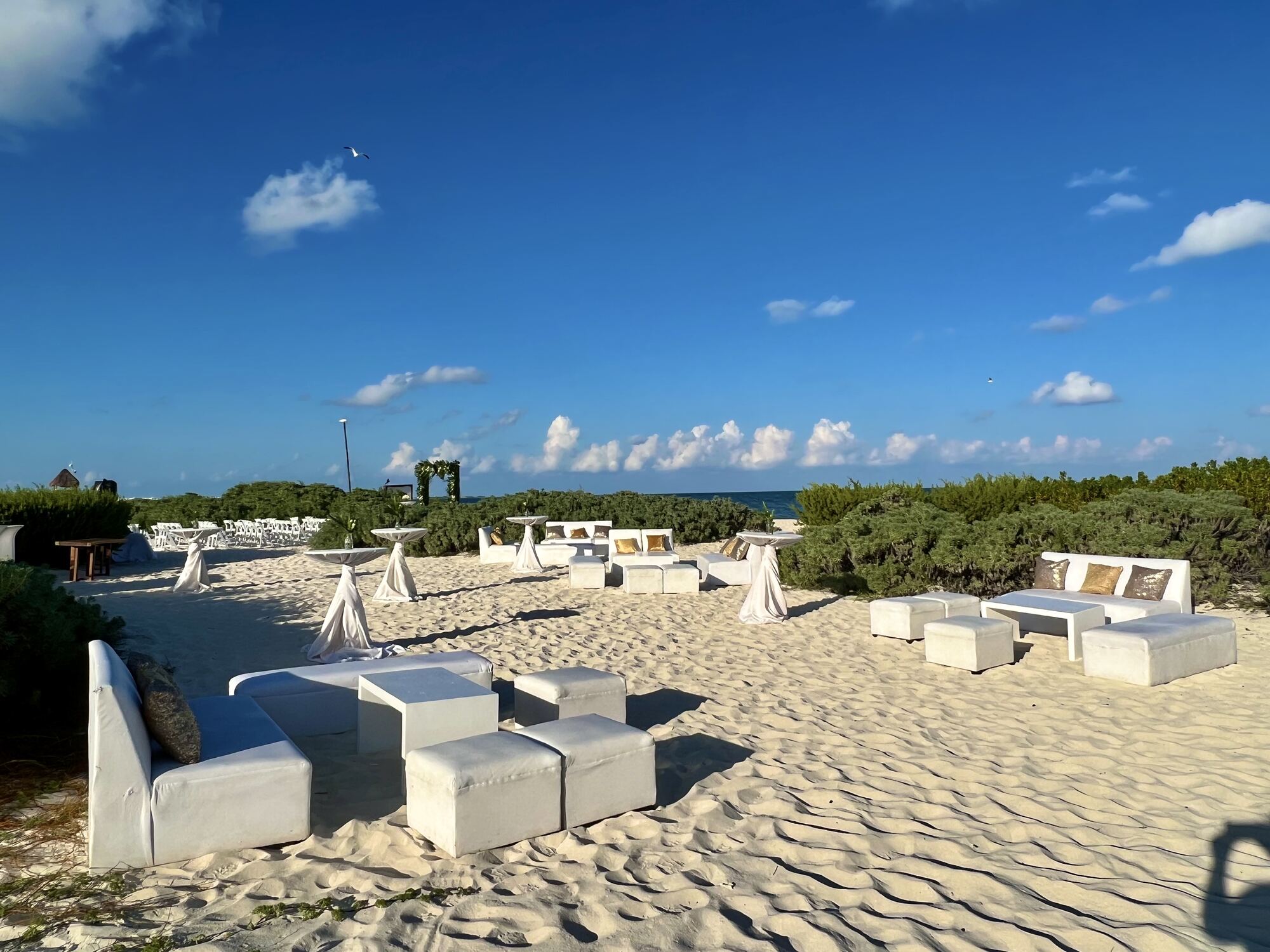
Strategy 1: Should you let the resort make the rule for you?
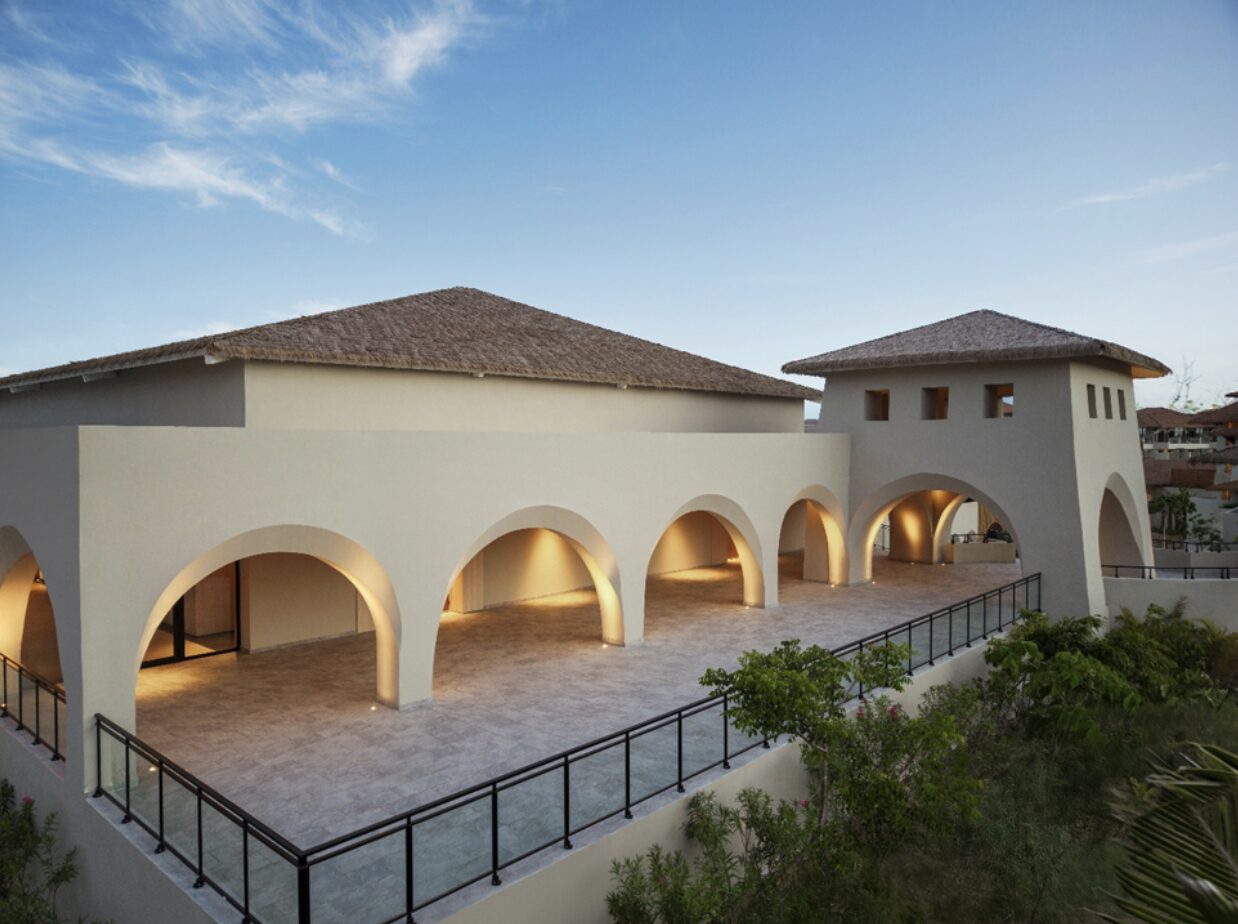
The simplest way to make a kid-free wedding feel less personal is to let the venue deliver the message. When you book an adults-only resort, you are not the one saying "no kids" — the resort is. Family sees it as a policy of the property, not a judgment call by you, and that reframing takes an enormous amount of heat out of the conversation.
Adults-only resorts are also just better environments for what you are trying to create. The music is calmer, the pools aren't overrun, the restaurants don't have kids' menus, and the vibe from check-in forward is grown-up. Your guests instinctively relax, because nobody is scanning the horizon for a child who wandered off.
One useful nuance: several adults-only properties define "adult" as 16 or 18 and up rather than 21+. That can be a graceful compromise if you'd love to have older cousins, teenage siblings, or a friend's near-adult child at the wedding without opening the door to every kid in the family tree.
Strategy 2: What if some guests won't travel without their kids?
Sometimes an adults-only resort isn't the right fit — maybe you want your niece to be a flower girl, maybe your best friend genuinely can't leave a nursing baby at home, maybe half your friend group has toddlers and would decline entirely if kids weren't welcome somewhere on property.
The clean solution is a dual-resort setup. Some destinations have properties where an adults-only resort sits directly next to a family-friendly sister resort under the same brand, sharing amenities and a shuttle. You host the wedding on the adults-only side, and the parents who need to bring kids stay next door — with a kids' club, a pool with a slide, and childcare options for the reception. Parents get flexibility, kids have somewhere age-appropriate to be, and your ceremony and reception stay adults-only.
This structure is a quiet superpower for couples who want the kid-free feel without cutting off half their guest list. Your travel advisor can steer you to specific brands and properties where this dual setup is genuinely well-run and not just marketing language.
What happens if you pick a family resort but keep the ceremony and reception kid-free?
Some couples land on a middle-ground choice: book a family-friendly resort so relatives with kids can still come on the trip, but keep the ceremony and reception itself strictly adults-only. That is a completely valid call — it's your day, and if that structure fits your family, run with it. But go in with your eyes open about the trade-off it creates, because it's the one detail couples don't think through until it's happening in real time.
Here's the piece nobody warns you about: on-site kids' clubs and resort daycare almost always close before your reception ends. Most kids' clubs shut down somewhere in the 9 to 10 pm range, and your reception is very likely going out to 11 pm or later. That means the parents in your group who are relying on that childcare are going to be doing one of three things during the back half of your night — leaving the reception early to go pick up the kids, popping in and out to check on them, or fielding a phone call from the kids' club mid-toast that pulls their attention completely off the room.
None of that is a reason not to make this choice. It just means you should expect that some of your guests will be less present for the last hour or two, and you shouldn't take it personally when they slip out during dessert. If you want the family-resort convenience but a fully adults-only celebration, plan the timeline knowing the reception's back half will thin out — put the moments that matter most to you (first dance, toasts, cake) earlier in the night rather than saving them for the very end.
Have you actually asked your guests what they want — or are you assuming?
This is the mistake I see most often, and it's completely preventable with one conversation. Couples make a huge decision — adults-only versus family-friendly resort — based on what they assume the important people in their lives will want, without ever picking up the phone to check.
I had a couple recently with a wedding group of about 70 people. They were leaning adults-only, but they had two young nephews they wanted to include, so they booked a family-friendly resort specifically to accommodate those two kids. Beautiful reasoning. The problem? After the resort was booked and the deposits were down, they found out the parents of those two nephews didn't even want to bring their kids on the trip. They were looking at this as a rare adults-only getaway for themselves and had already been planning to leave the kids with grandparents at home.
So all 70 guests ended up traveling to a family-friendly resort with zero children in the entire group — when an adults-only property would have been the better fit for literally everyone. The couple told me later they hadn't asked directly because they thought it would be rude, like they were fishing for the parents to volunteer to leave their kids behind. By the time the truth came out in casual conversation, they were locked into the resort and it was too late to switch.
Ask. Before you book, before you put down deposits, before you narrow the resort list, have a short, low-pressure conversation with the specific relatives whose kids are driving your resort-type decision. "Hey, we're picking between adults-only and family-friendly — are you planning to bring the kids or leave them at home? No wrong answer, we just want to pick the right property for what most people actually want." It's not rude. It's the opposite — it saves everyone from a resort that fits nobody. The couples who ask this question up front consistently end up at the property that actually matches the trip their group wanted to take.
Strategy 3: How should you word the invitation and communicate the decision?
Wording matters more than most couples expect. The old-school etiquette move — and it still works — is to address the invitation only to the named adults. "Mr. and Mrs. Rivera" is an invitation for two adults. "The Rivera Family" is an invitation for everyone under that roof. When you address the outer and inner envelopes precisely, you have told your guests who is invited without having to write a single sentence about children.
That said, the invitation should not be the first time a close family member with kids hears about this. If your sister has three children and the invitation arriving in the mail is her introduction to the fact that they aren't coming, you have set yourself up for exactly the phone call you were trying to avoid. Call her. Call your best friend with the toddler. Tell them warmly and directly, before the mail carrier does it for you, that this is going to be an adults-only celebration and here is why you'd love them to still come.
Frame it as a gift, not a rule. "We wanted you to have a real vacation for once — no bedtimes, no watching everyone else's kids, just you two." That is a different conversation than "kids aren't welcome." Same policy. Completely different reception.
Should ceremony and reception have different rules for kids?
This is one of the most common guest questions, and my answer is almost always the same: keep the policy consistent across the whole event. "Kids at the ceremony but not the reception" sounds like a fair compromise on paper, and in practice it creates more problems than it solves.
You end up with parents scrambling to find childcare during the exact window when they'd need it the least (a 30-minute ceremony), kids being visibly excluded from the fun part right in front of them, and a policy that reads as arbitrary. It also puts you in the position of policing which kid is where at any given moment, which is not how you want to spend your wedding day.
Pick one lane: fully kid-free (with the possible exception of your own children or stepchildren, or a niece/nephew serving in the wedding party — see the next section) or fully kid-inclusive. Consistency is what makes the boundary feel like a real decision rather than a mixed signal.
How do you handle exceptions for the wedding party's own kids?
This is where couples tie themselves in knots. "Kid-free except my kids" or "kid-free except my flower girl niece" can absolutely be your rule — as long as you are clear-eyed about which exceptions you're making and why.
The exceptions that hold up cleanly are family-of-the-couple exceptions: your own children or stepchildren from a previous relationship, kids serving in the wedding party in a real role (ring bearer, flower girl, junior groomsmen), and sometimes a nursing infant who cannot be separated from a parent for the duration of the event. These are specific, defensible, and easy to explain if asked. "Yes, our kids are in the ceremony. Everyone else's stay at home for this one."
The exceptions that get you in trouble are the fuzzy ones — one cousin's kid but not another's, or an exception you granted because someone applied pressure. If you can't explain the rule to yourself in one clean sentence, guests will spot the inconsistency, and it will feel like favoritism rather than a policy.
How early should you tell guests it's a kid-free wedding?
As early as possible, and to the closest people, in person or on the phone. The save-the-date is the perfect early signal for the broad list — "Adults-only celebration" printed neatly at the bottom, along with the destination and dates, gives every family with kids six-to-twelve months of runway to figure out childcare or, honestly, to decide gracefully that they can't come.
For your inner circle — parents, siblings, best friends with young kids — do not rely on the save-the-date. Pick up the phone before those mail. "I wanted you to hear this from me first, we're doing an adults-only weekend, and I really hope you can come. Here's what we're thinking about childcare / the kids-friendly resort next door / how we can help." A five-minute call in month one prevents a three-month standoff in month six.
The one thing that never works: hoping guests will figure it out from the invitation and stay quiet about it. They won't. Give them the information, give them time, and give them a real conversation.
How do you respond when family pushes back anyway?
Even when you do everything right — adults-only resort, warm phone calls, gracious wording — someone is still going to push back. It might be a parent who thinks a wedding without kids is inherently rude. It might be a sibling who took it as a personal rejection of their family. It might be a well-meaning aunt at Christmas, in front of the whole room, wanting to know why.
You do not owe a defense. You owe a short, kind, repeatable sentence: "We really wanted this to feel like a getaway for the adults, and we hope you'll come. If travel with the kids isn't going to work, we completely understand and we'll celebrate with you at home." Say it once. Say it again the same way. Do not litigate.
Some guests will still decline. That is a legitimate choice on their part, and it is not the same as them being angry with you. A no is a data point, not a punishment. Your wedding is not a headcount contest — it is one specific day that you are shaping around a vision. The guests who show up are the ones who wanted to be there under your terms, and that is exactly the room you want.
Shanna's Final Take
A kid-free destination wedding is not a betrayal of anyone. It is a specific choice about the environment you want on one of the biggest days of your life, and there is nothing selfish about wanting a ceremony without pacifiers in it. The people who love you will come, will have a genuinely restorative trip, and will thank you afterward for the excuse to travel like adults again.
If you're planning one and running into pressure from family, I've been there — literally, at that Christmas party, with my face on fire — and I can tell you the discomfort is temporary. The wedding is what you'll remember. Choose the right resort, communicate early and warmly, and hold the line. For more on managing the guest side of a destination wedding, see How to Be the Perfect Destination Wedding Guest and What to Tell Your Wedding Guests.
Honest verdict
- Best for
- Couples who want an adults-only atmosphere and are willing to communicate the decision warmly, early, and consistently — ideally by booking an adults-only resort so the venue delivers the message.
- Not ideal for
- Couples who want a kid-free wedding but plan to spring it on family via the invitation alone, or who intend to grant one-off exceptions based on which relative complains the loudest.
- What I'd choose instead
- If half your closest people won't travel without their kids, book a resort with an adults-only side and a family-friendly sister property next door — hold the wedding adults-only, let parents stay next door with the kids' club.
Frequently asked
How do you word an invitation for a child-free destination wedding?
Address the invitation only to the named adults on both the outer and inner envelope — "Mr. and Mrs. Rivera" rather than "The Rivera Family." You can also add a short line on the details card or wedding website such as "Adults-only celebration" or "We have reserved a seat for two adults." Follow up with a phone call to close family and friends with kids so the invitation is not their first notice.
How do you respond to family pushback about not inviting their kids?
Use one short, warm, repeatable sentence and do not litigate it. Something like: "We really wanted this to feel like a getaway for the adults, and we hope you'll come. If travel with the kids isn't going to work, we completely understand." Say it once, say it the same way twice, and stop explaining. Some guests will decline, and that is a legitimate choice, not a rejection of you.
Can the ceremony be kid-friendly and the reception adults-only?
It is technically possible but almost always creates more problems than it solves — parents scrambling for childcare during the shortest window of the event, kids being visibly excluded from the fun part right in front of them, and a policy that reads as arbitrary. Pick one lane: fully kid-free (with narrow exceptions like your own children or wedding-party kids) or fully kid-inclusive. Consistency makes the boundary feel intentional.
Is it okay to make exceptions for the wedding party's own kids?
Yes, as long as the exceptions are specific and defensible in one clean sentence. Common exceptions that hold up: your own children or stepchildren, kids serving in the wedding party in a real role (flower girl, ring bearer), and sometimes a nursing infant who can't be separated from a parent. Fuzzy one-off exceptions — one cousin's kid but not another's — feel like favoritism and undermine the whole policy.
When should you tell guests the wedding will be child-free?
As early as possible. Put "Adults-only celebration" on the save-the-date so the broad list has six-to-twelve months to plan childcare or decline gracefully. For your inner circle — parents, siblings, and closest friends with young kids — pick up the phone in the first month, before any paper lands. A five-minute call up front prevents a three-month standoff later.
Should we ask guests directly whether they plan to bring their kids before we book the resort?
Yes — and it's not rude, it's the smart move. Couples routinely lock in a family-friendly resort to accommodate a small number of kids, only to find out later the parents were planning to leave the kids home anyway. A short, low-pressure conversation with the specific relatives whose kids are driving your resort-type decision, before you put down deposits, prevents booking a property that ends up fitting nobody. Something like: "We're picking between adults-only and family-friendly — are you planning to bring the kids or leave them at home? No wrong answer."
Can we book a family-friendly resort but still keep the ceremony and reception kid-free?
Yes, and it's a legitimate structure — you just need to plan the timeline knowing on-site kids' clubs and resort daycare typically close by 9 or 10 pm, before most receptions end. Parents relying on that childcare will likely leave the reception early, pop in and out to check on the kids, or get pulled away by a call from the kids' club. Put the moments that matter most (first dance, toasts, cake) earlier in the night rather than saving them for the very end, and don't take it personally when some guests slip out during dessert.