The travel-agency meeting that talked me out of my own destination wedding
In 2003 I walked into a travel agency newly engaged, with a head full of dreams and a very clear sense of what I wanted: a destination wedding. I walked out having been handed exactly one option — an island I'd never heard of. No questions about what I envisioned. No conversation about what mattered to me. No attempt to understand who I was or what I was trying to create.
I also remember being told there had to be a man and a woman in each room, and that each room only had a king bed. I sat there thinking, but I have girlfriends who'd be sharing a room. Not everyone coming to my wedding has a significant other. How is that supposed to work? I didn't know any better. I trusted the professional sitting in front of me.
So I left thinking a destination wedding wouldn't work for the people in my life. I felt invisible. Eventually I gave up and got married at home.
In 2006 I attended a friend's destination wedding in Negril, Jamaica. Standing there watching her exchange vows in a setting that was genuinely hers, something clicked. I hadn't failed to have a destination wedding. I'd been failed by the person whose job it was to help me have one.
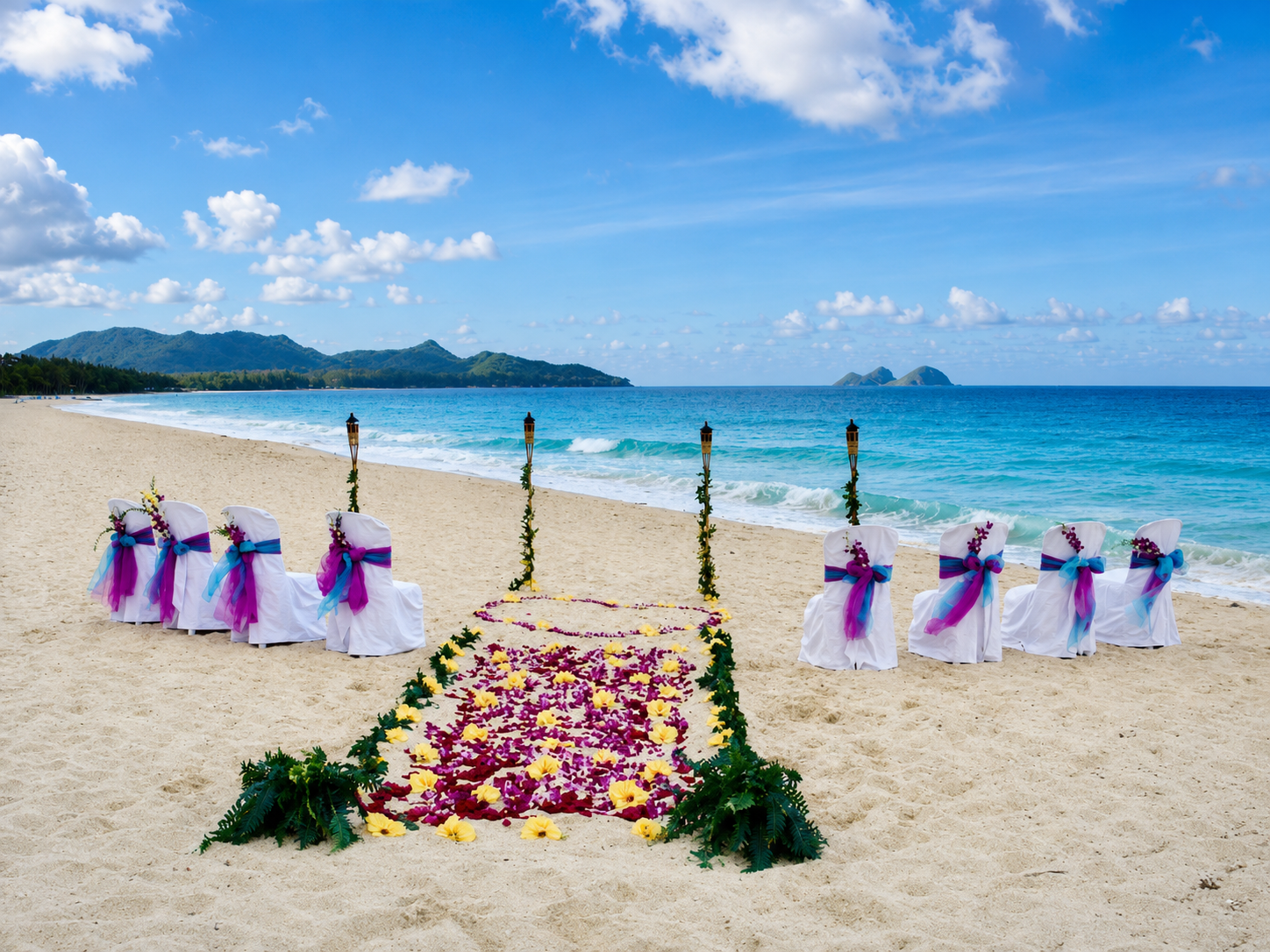
Then in 2010 I planned my first destination wedding — my sister's, in Oahu. After her ceremony on the beach I looked at my husband and said, 'You know, this was literally supposed to be us.' That feeling wasn't small. It was regret, and real FOMO before we were all saying FOMO every five seconds. And honestly, it lit a fire in me.
Lesson 1: A destination wedding isn't a vacation with a ceremony bolted on
This was my fundamental misunderstanding. I thought I was booking a trip that happened to include a wedding. What I didn't understand is that a destination wedding is an event — a complex, multi-vendor, multi-room-block, multi-timeline event — that happens to take place somewhere beautiful.
The logistics are real. Group room blocks require contract negotiation. Guest transportation requires coordination. The resort's wedding package is a starting point, not a finished product. There are vendor timelines, ceremony permits in some locations, catering minimums, setup windows, and rain contingency plans.
None of that is impossible — when it's managed well, it becomes invisible to your guests, which is exactly the point. But it has to be managed. Assuming a beautiful resort automatically produces a beautiful wedding is how couples end up with a generic ceremony, a reception that ran out of time, or a contract clause that cost them $3,000 they didn't expect.
Lesson 2: The person you hire should ask more questions than you do
The agent I saw in 2003 asked me approximately zero questions. Ironically it was a husband-and-wife duo, which you'd think might have made it feel more personal. It didn't. They pointed me at a laminated page and waited.
That's the clearest signal you can get that someone isn't equipped to help you. A real destination wedding planner leads with curiosity: What does your guest list look like? What matters most — the setting, the food, the privacy, the activities? Are your guests adventurous travelers, or does this need to be very accessible? What's your true budget, the honest one? Do you want to be legally married there, or handle that at home?
My background is in counseling — I have a Master's from Webster University, earned at 24, and I was doing clinical work before I pivoted to travel. What that training gave me was the ability to actually listen: to hear not just what someone says but what they mean, and to notice when the stated preference and the underlying need are slightly different. That skill isn't incidental to planning. It is the work.
When you hire someone for this, the first few conversations should feel like you're being deeply understood. If they feel like a sales pitch, trust that signal.

Lesson 3: Your guests' experience is part of your wedding
I spent my early planning thinking almost entirely about the ceremony moment — the vows, the setting, the photos. I didn't think about what my guests would experience from the moment they booked their flights to the moment they got home.
Done well, a destination wedding is a multi-day experience for everyone involved. Guests are committing real time and real money to be there. Room block rates matter: the difference between a well-negotiated group rate and standard retail can be $50–$100 per night per room, which over four or five nights becomes a meaningful number for families traveling with you.
Your guests should feel hosted, not just invited. That's not a nice-to-have — it's most of what people remember.
Lesson 4: A five-star review doesn't mean a five-star fit
I'm much more comfortable talking about my mistakes than my awards. When you start anything new, you don't know what you don't know — and I made plenty of mistakes along the way.
I still remember one of the first all-inclusive honeymoons I planned. I chose the resort based on high reviews and a strong star rating, and technically the reviews weren't wrong: five-star, serene, pampering, adults-only. But it was the wrong resort for that couple. They were young honeymooners who wanted fun, energy, thrills, waterslides, more to do. What they got was quiet and polished.
When they came back disappointed, I knew exactly where I'd missed it. I'd chosen a great resort. I hadn't chosen the right resort for them. That phone call stayed with me — I remember thinking, I never want that call again. That's when I got serious about visiting as many all-inclusive resorts firsthand as I possibly could.
Here's a moment that taught me why site knowledge matters. One of my couples had their reception in a beautiful courtyard — private, intimate, tucked away from the main resort activity. Exactly what you'd want for dinner and speeches. But adjacent to that courtyard was the resort's nightly entertainment venue. Once the music started, it was loud enough to drown out the speeches. There are few things more frustrating than watching a carefully planned, intimate moment compete with entertainment nobody warned you about.
A brochure will not tell you that. I've now personally visited more than 300 all-inclusive resorts, and that number isn't a boast — it's the answer to this exact problem. Property photos are marketing materials. Floor plans are abstractions. The only way to know whether a resort is genuinely good for a wedding, as opposed to a great resort that tolerates weddings, is to walk it. Stand in the ceremony location at the time of day your ceremony would happen. Understand what's happening nearby during your reception. Eat the food. Watch how the staff communicates.
Lesson 5: 'Affordable' and 'cheap' are not the same thing
Here's a belief I held in 2003 that I've completely reversed: I thought a destination wedding would cost significantly more than we could afford. I was wrong. But I didn't know I was wrong, because nobody walked me through the numbers.
The all-inclusive model changes the math in ways that aren't obvious. Food, drinks, entertainment, accommodations — included. Your guests pay for themselves, just as they would for any trip. And a complimentary wedding package kicks in once your group books a minimum number of room nights, which is often easier to hit than couples expect.
The average couple I work with today spends under $10,000 for their flights, accommodations, and wedding package combined. The average U.S. honeymoon alone runs around $5,000. Doing that math in 2003 might have changed my life. For a real-world example of what these numbers look like in one destination, see How Much Does a Costa Rica Destination Wedding Cost in 2026.
What I wish I'd known: just ask. Ask what a destination wedding actually costs. Ask for real numbers from someone who's done this, not an estimate from someone who wants to sell you a standard package.
Lesson 6: You won't regret having more help
I've talked to couples who planned without a professional and came through fine. I've also talked to couples who spent the week before their wedding managing a vendor miscommunication, an overbooked room block, and a florist whose understanding of 'tropical floral arrangement' was nothing like theirs.
What I know, from both counseling and event planning, is that people underestimate complexity until they're inside it. A destination wedding means vendors in another country, contracts in another language, guests in multiple time zones, and logistics spanning months.
The question isn't whether something will go wrong — something always does. The question is whether you have someone in your corner who's seen that thing before and knows how to handle it. Don't let someone hand you a brochure and call it planning.
Lesson 7: The right planner changes the entire experience
After Negril, and after Oahu, that clarity only got louder. It took a few more years, some real reflection, and a career pivot before it became something.
But when Ted and I opened WorldWide Travel Team in 2009, that feeling was in the room with us. It shaped how we built the agency, who we brought on, how we train, and what we promise. Today we have agents spread coast to coast — California, New York, Florida, and points in between — so couples across the country can work with someone who actually knows this.
What that represents is hundreds of couples who got the experience they deserved. Who were heard from the first conversation. Who walked into their ceremony knowing every detail had been handled by someone who genuinely cared about getting it right.
That's not what I got in 2003. It's exactly what I offer now.
Shanna's Final Take
If you take one thing from my story, let it be this: the reason I didn't have a destination wedding wasn't budget, or logistics, or my guest list. It was that the person I asked for help didn't ask me a single question. Twenty-plus years later, I can tell you that's still the difference between couples who love their wedding week and couples who spend it managing problems. Your first destination wedding shouldn't be your practice round — and it doesn't have to be, if you're working with someone who's already made the mistakes.
Honest verdict
- Best for
- Couples who suspect a destination wedding might not work for their group — that's exactly what I believed in 2003, and it wasn't true. It's worth one real conversation before you rule it out.
- Not ideal for
- Couples who want someone to hand them a package and stay out of the way. I ask a lot of questions, and if that feels like too much, we're probably not the right match.
- What I'd choose instead
- If you're set on planning it yourself, at minimum get someone experienced to review your resort contract and room-block terms before you sign. That's where the expensive surprises hide.
Frequently asked
Do I need a destination wedding specialist, or can a general travel agent handle it?
A general travel agent can book flights and hotels. A destination wedding specialist understands group contracts, wedding package negotiations, vendor restrictions, ceremony logistics, and the dozens of details standing between 'great trip' and 'great wedding.' Look for a Certified Destination Wedding Planner designation specifically.
How early should we start planning?
Twelve to eighteen months is the ideal range. Group room blocks at popular resorts fill fast, the best dates go quickly, and gathering documents — especially for a legal ceremony — takes time. Starting a year out gives you runway without panic.
Can I plan a destination wedding on a tight budget?
Yes. My average client spends under $10,000 for the couple's flights, accommodations, and wedding package. The key is understanding how the all-inclusive model works, how group room blocks reduce your cost, and how complimentary wedding packages get triggered.
What do you wish you'd known about choosing a destination?
That the 'destination' isn't just a country — it's a specific property, a specific setting, a specific experience. The difference between a wedding-friendly resort and a genuinely great wedding resort is real, and it takes someone who's visited firsthand to explain it. If you're weighing Costa Rica specifically, <a href="/blog/destination-wedding-in-costa-rica" class="underline decoration-charcoal/30 underline-offset-2 hover:decoration-charcoal">the Costa Rica insider's guide</a> and the <a href="/blog/costa-rica-wedding-regions-guide" class="underline decoration-charcoal/30 underline-offset-2 hover:decoration-charcoal">seven regions guide</a> are the right places to start.
What's the first step if I want to work with you?
Reach out and we'll have a real conversation — not a pitch. I'll ask about your guest list, your budget, what matters most to you, and what you're picturing. That conversation is free, and you'll leave it knowing more than when you started, whether or not we work together.