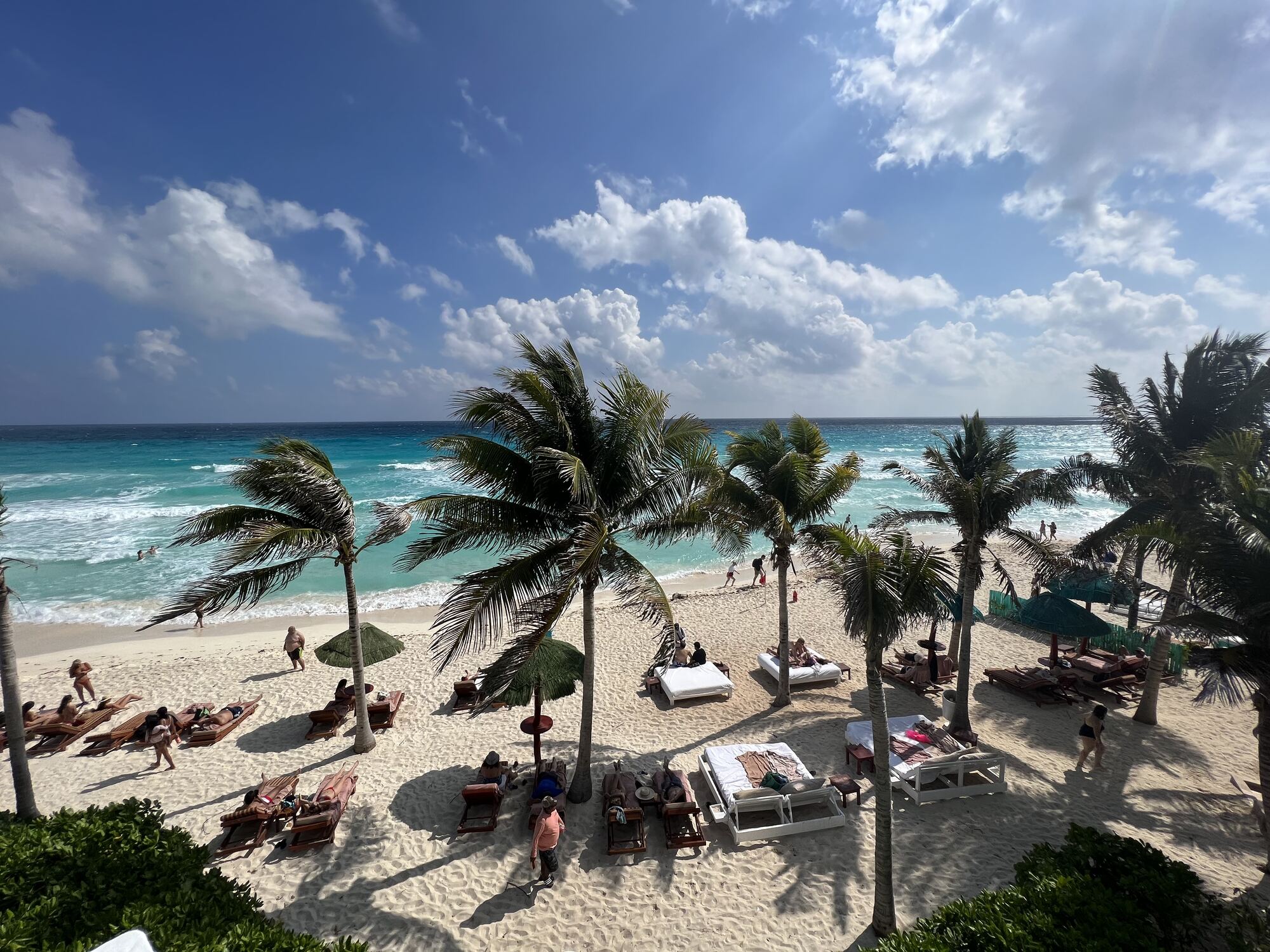
Why does the season you pick matter so much?
Deciding on the season for a destination wedding is more than picking a date on a calendar. It shapes almost everything — the weather your ceremony ends up under, what your guests pay for flights, whether the resort is buzzing or half-empty, and how much flexibility you have on venues, photographers, and vendors. Flexibility on your date is the single biggest lever couples have, and the ones who lean into it end up with better weather, better pricing, or both.
The good news: for the destinations I plan most weddings in — Mexico, Costa Rica, Punta Cana, and Jamaica — the climate is warm year-round, so no month is a "bad" month. What changes is the tradeoff between weather predictability, cost, and crowds. Once you understand that tradeoff, the right season for your wedding usually becomes obvious.
When is peak season in the Caribbean and Mexico?
Peak season for Caribbean and Mexico destination weddings runs roughly mid-December through April. This is the dry season across most of the region — humidity is lower, rain is rare, and the days trend sunny and breezy. It's also when North American winter travel peaks, so resorts run at their highest occupancy and their highest published rates. Christmas and New Year's are the absolute peak, followed by Presidents' Day weekend, spring break weeks in February and March, and Easter.
The pros of peak season are real: the weather is genuinely the most predictable it gets, the resorts are in full swing with every venue and restaurant open, and the light is beautiful for photos. The cons are equally real — you'll pay top rates on rooms and flights, wedding venues on your date may already be booked a year or more out, and your guests will be booking their travel into the most expensive weeks of the year.
When is Caribbean hurricane season, and how much should it worry you?
Atlantic hurricane season officially runs from June 1 through November 30, and it applies to the entire Caribbean basin plus the Mexican and Central American coastlines that face it — the Riviera Maya, the Yucatán, Punta Cana, Jamaica, and Costa Rica's Caribbean coast. The historical peak of storm activity within that window is August through October, with September typically the single most active month.
That doesn't mean weddings in those months are cancelled by storms — the vast majority go off without any weather disruption at all. What it does mean is that the statistical odds of a named storm affecting travel is higher, and that risk is priced into everything from flight refundability to your guests' travel-protection decisions. If you're planning a wedding week between mid-August and mid-October, the honest move is to plan for the possibility, not against it. That means real travel protection for you and every guest, a resort with a hurricane guarantee or rebooking policy, and mental flexibility about a Plan-B ceremony space if the outdoor site isn't safe on the day.
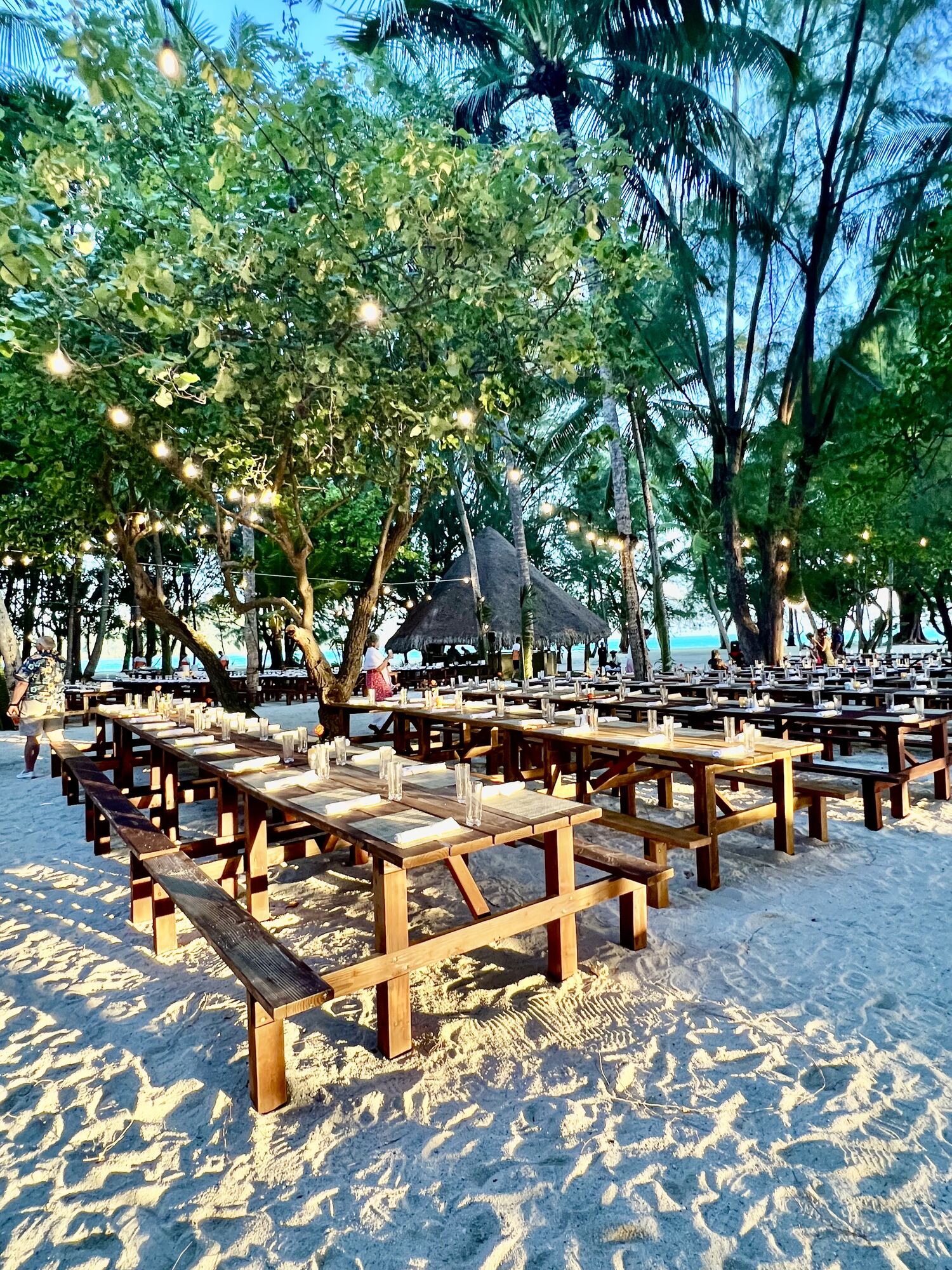
What is shoulder season, and is it really the sweet spot?
Shoulder season sits between peak and off-peak — the months that share most of the weather advantages of high season but come with meaningfully lower prices and thinner crowds. In the Caribbean and Mexico, the shoulder months are late April, May, and the first half of November. Late April and May sit at the tail end of dry season, before hurricane season peaks; the first half of November sits at the tail end of hurricane season, as the tropics quiet down and the drier northern trade-wind pattern reasserts itself.
For most couples I plan for, shoulder season is the honest sweet spot. Weather is usually excellent — warm, mostly dry, and outside the highest-risk hurricane weeks. Resort pricing is a real step down from peak, sometimes 15–30% off comparable rooms in February or March. Wedding venues have far more open dates, which gives you leverage on ceremony times, dinner locations, and preferred photographers. And the resort feels less like a spring-break week and more like a private celebration — genuinely nicer for a wedding-week vibe.
The tradeoff is honest too: shoulder-season weather isn't as bulletproof as peak dry season. A May afternoon might bring a passing shower; an early-November week might catch the tail of a late-season storm. Neither is common, but they happen. If you can hold Plan-B space on the schedule and buy travel protection, shoulder season is usually the best-value window that exists.
What are the pros and cons of getting married in each climate window?
The right season is a personal tradeoff between weather predictability, budget, guest comfort, and calendar flexibility. Here's how the three windows actually shake out across the destinations I plan for most:
| Window | Pros | Cons |
|---|---|---|
| Peak dry season (mid-Dec – April) | Most predictable weather, all resort venues open, holiday-week celebration energy, best light for photos | Highest room and flight pricing, venues book 12–18 months out, most crowded resorts, guests pay peak travel rates |
| Shoulder (late April, May, first half of Nov) | Warm and largely dry, meaningfully lower pricing, more venue and vendor availability, thinner crowds | Slightly higher chance of a passing shower or late-season storm, some resort events run on a lighter schedule |
| Hurricane season peak (Aug – early Oct) | Lowest published pricing of the year, easiest to secure preferred venues and vendors, warm ocean water, empty beaches for photos | Highest storm-disruption risk of the year, travel protection is essentially non-optional, humidity is at its peak, some resorts run reduced hours |
Every couple weights those tradeoffs differently. Weather-first couples with a strict date land in peak. Value-first couples who can flex their date usually end up in shoulder. Couples on a tight budget who accept storm risk (with real travel protection) can find genuine deals in the deepest hurricane months — but that's a bet, and you have to be honest with yourself about whether you can absorb a disruption if it comes.
How does the season change your budget?
Cost is one of the biggest variables between seasons, and it moves in two directions simultaneously. Resort room rates rise and fall with occupancy — highest during Christmas/New Year's and spring break, lowest in September. Flight prices track the same curve, sometimes more sharply, because North American winter routes to the Caribbean fill first. And beyond published rates, resorts often layer promotional pricing (extra room-night credits, complimentary upgrades, resort credits) more generously in shoulder and off-peak months to fill inventory.
For a typical destination-wedding week for 30–60 guests, shifting from a peak week to a shoulder week can move the all-in-per-guest cost by hundreds of dollars, and can unlock a category of upgrades — swim-up rooms, ocean-view suites, Preferred Club access — that peak-season rates simply price out for the same group. If you want a broader map of what the numbers actually look like, the piece on how much a destination wedding actually costs walks through it in detail.
How should guest schedules shape the date you pick?
Weather and pricing get most of the attention, but the season also has to work for the guests you actually want at the wedding. Families with school-age kids are locked to summer, spring break, and holiday weeks — which pushes you toward peak or hurricane-season pricing. Couples heavy on close friends and coworkers usually have more flexibility, and shoulder-season Fridays and Saturdays tend to land beautifully.
A few honest calendar tradeoffs I walk couples through every week: end-of-May weddings work well for guests without kids but conflict with high-school and college graduation weekends. Early-November weddings avoid Thanksgiving and Christmas but can catch parent-teacher conference windows. Late-April weddings sit in a great weather pocket but need to dodge Easter when it lands late. None of these are dealbreakers — they're just worth mapping before you commit to a week. And if which day of the week you host the ceremony matters to your group, the piece on the best day of the week for a destination wedding is a useful companion to season planning.
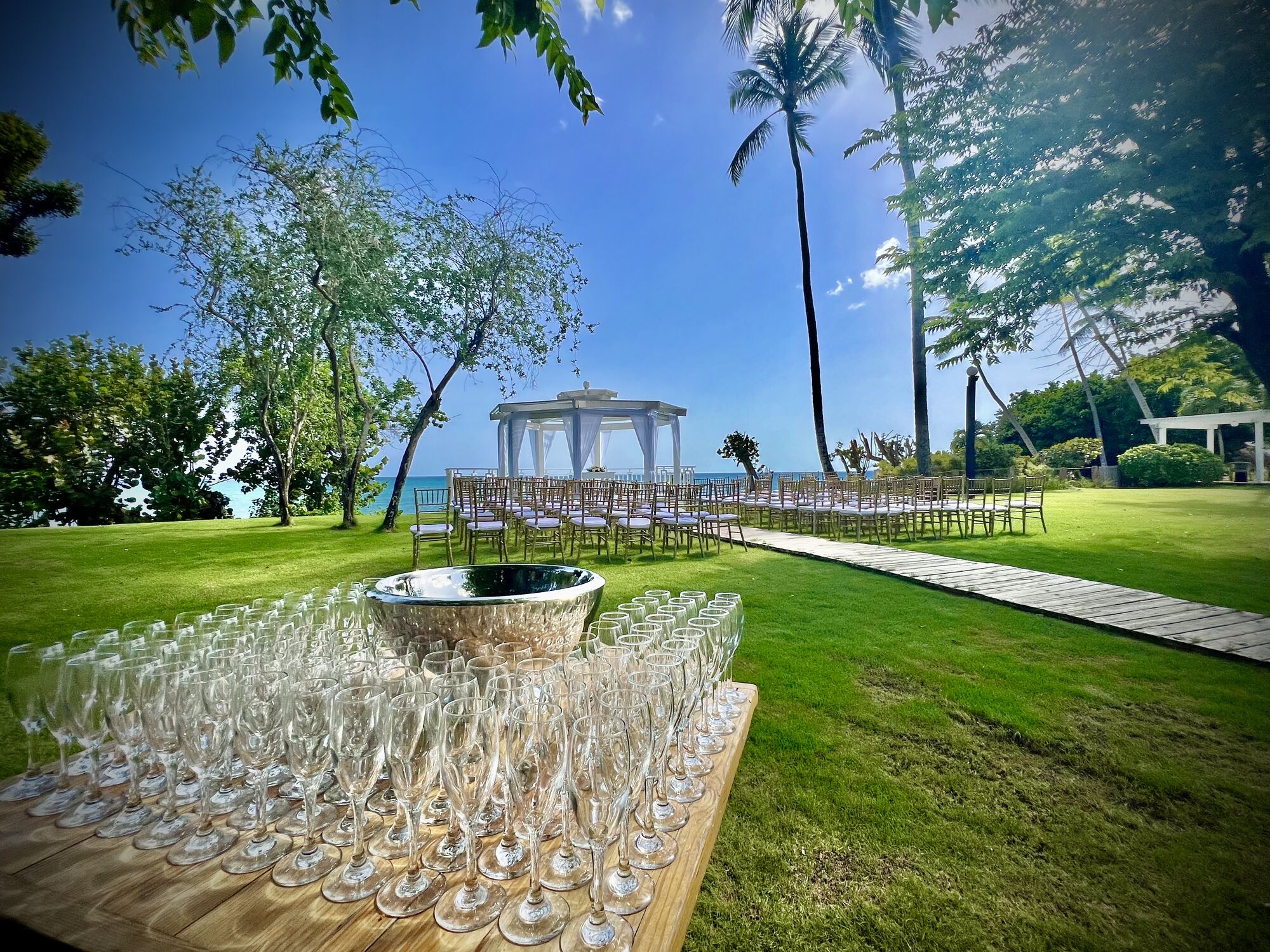
How much can weather really surprise you, even in peak season?
Even in the driest month at the sunniest resort, weather can still hand you an afternoon squall, a windy ceremony, or a cloud bank that rolls in ten minutes before sunset. That's the honest truth of an outdoor destination wedding: you're getting married in a place where the weather is one of the reasons everyone came, and that same weather has its own opinions.
The couples who handle weather surprises well are the ones who accept up front that a passing shower or a windy sand-in-your-hair moment isn't a disaster. Some of the most beloved wedding photos I've seen were taken in the rain, under an umbrella, or with the veil catching an unexpected gust. Resorts I work with have real Plan-B spaces — covered terraces, ballrooms, palapa-covered gazebos — that get used more often than couples expect, and never at the cost of the day. Flexibility on the moment is as important as flexibility on the season.
Does sargassum seaweed affect destination wedding season planning?
Sargassum — a brown, free-floating seaweed that drifts in from the Atlantic — can affect the look and smell of some Caribbean-facing beaches, especially on Mexico's Riviera Maya and Cancún/Playa del Carmen/Tulum coast, and along parts of the Dominican Republic's east coast including Punta Cana. It typically shows up in the heaviest volumes between April and October, though the exact timing, intensity, and location vary year to year and even week to week.
The honest truth: it isn't a reason to avoid an entire destination, but it is a reason to ask the right questions before you book. If pristine beach photos are a top priority, talk to your specific resort about beach-cleaning practices, equipment, and current conditions. Some resorts rake and clear their beach daily; others have less capacity. Pacific-facing Mexico destinations like Puerto Vallarta and Los Cabos don't experience sargassum at all, so couples who are nervous about it can simply steer west and skip the conversation entirely.
What about Costa Rica specifically — does the same season logic apply?
Mostly, but not exactly. Costa Rica has its own two-season pattern (dry season roughly December to April, green season May through November), and it varies by region — Guanacaste on the Pacific coast is meaningfully drier than the Caribbean coast, and the rainforest interior has its own microclimate. Hurricane risk is much lower than in the Caribbean basin, but green-season afternoon rains are a real planning input.
Mexico's Pacific coast — Puerto Vallarta and Los Cabos — generally runs lower humidity and lower hurricane risk than the Caribbean side, with its best-weather window roughly November through June. There's a nice bonus for couples marrying between November and April: whale migration season, which can add a memorable backdrop for beach photos.
If Costa Rica is on your shortlist, the season conversation is worth having through a Costa-Rica-specific lens — see the deeper piece on the best time of year to get married in Costa Rica, which breaks down the dry vs. green season tradeoffs and the regional differences in detail. For a wedding in Mexico, Punta Cana, or Jamaica, the framework in this piece is the right starting point.
How do you actually pick the right season for your wedding?
Start with your non-negotiables. Is there a firm date driven by an anniversary, a family milestone, or a work calendar? If yes, peak season is likely the right call and you're planning around predictability. Is your date genuinely flexible within a two-to-three-month window? Then shoulder season is almost always the smarter play. Is budget the primary constraint and you can accept meaningful storm risk with proper travel protection? Then late spring or the deeper hurricane months open up real savings.
Then layer in your guests. Are they mostly families locked to school calendars, or friends and coworkers with more control over PTO? Are your key VIPs — parents, siblings, wedding party — able to travel outside of major holiday weeks? A wedding date is only successful if the people who matter most can be there. Sometimes the honest answer is that your guests dictate the season more than the weather does, and that's fine.
Finally, sanity-check the venue. The specific ceremony and reception spaces you want may only be available on certain days, in certain months. Before you commit to a season in the abstract, run it against real venue availability for the year you're planning — the answer sometimes shifts a shoulder-season week into a peak-season week, or the other way around. If you haven't nailed down whether you're going resort-first or venue-first, the piece on resort-first or venue-first for a destination wedding pairs naturally with this decision.
Shanna's Final Take
The best season for a destination wedding is the one where weather, budget, and guest comfort all point roughly in the same direction — and for most couples I plan for, that's shoulder season. Late April, May, and the first half of November genuinely offer the best of everything: warm dry-adjacent weather, better pricing, more venue availability, and a resort atmosphere that feels like a wedding week rather than a holiday-week rush. Peak season is worth it when predictability matters more than everything else. Hurricane-season deep discounts are worth it when budget matters more than predictability, and only with real travel protection layered underneath.
The couples who agonize most over the date are usually the ones treating it as a single locked-in variable. The couples who breeze through it are the ones who hold two or three viable windows loosely, then let venue availability, guest calendars, and pricing tell them which one to pick. Flexibility is genuinely the best planning tool you have — a little of it changes the entire experience, for you and for the people you're bringing with you.
Honest verdict
- Best for
- Couples who can flex their wedding date within a two-to-three-month window and want the best combination of weather, pricing, and venue availability. Shoulder-season weddings (late April, May, first half of November) hit this profile better than any other window.
- Not ideal for
- Couples locked to a single specific date driven by an anniversary, holiday, or family milestone that lands in the highest-risk hurricane weeks (mid-August through early October) — that combination pushes storm risk higher than most couples want to carry, even with travel protection.
- What I'd choose instead
- If your date can't move but sits in the peak-storm window, choose a resort with a strong hurricane rebooking policy, hold a real Plan-B indoor ceremony space, and require every traveler in your group to carry travel protection. That layering brings the risk back into an acceptable range.
Frequently asked
What is the best month for a destination wedding in Mexico or the Caribbean?
For most couples, late April, May, and the first half of November are the sweet-spot months — warm, largely dry, meaningfully cheaper than peak season, and outside the highest-risk hurricane weeks. Mid-December through April offers the most predictable weather but the highest prices and the most crowded resorts. August through early October carries the highest storm risk but the lowest published pricing. The right month is a tradeoff between weather predictability, budget, and calendar flexibility — and for couples with any flexibility on their date, shoulder season usually wins.
When is hurricane season, and should I avoid it for my wedding?
Atlantic hurricane season officially runs June 1 through November 30, with peak storm activity in August, September, and early October. September is historically the single most active month. You don't have to avoid the whole six-month window — most weddings within it are unaffected — but if you're planning a wedding week between mid-August and mid-October, you should carry real travel protection, choose a resort with a clear hurricane-rebooking policy, and hold Plan-B indoor ceremony space on the schedule. Late May, June, early July, and the first half of November are all inside hurricane season on paper but carry meaningfully lower statistical risk than the August–early-October peak.
How much cheaper is off-peak or shoulder season compared to peak?
It varies by destination and resort, but a typical shoulder-season week (May or early November) can run 15–30% below the same room in a comparable peak-season week (February, March, or Christmas). Off-peak hurricane-season weeks (August and September) can be even lower on published rates, and often come with more generous promotional layering — extra room-night credits, complimentary upgrades, additional resort credits. Flight pricing tends to track the same curve, sometimes more sharply. For a group of 30–60 guests, the difference between a peak week and a shoulder week can easily be hundreds of dollars per guest.
Is it safe to plan a destination wedding during rainy or green season?
Yes, and thousands of weddings happen in green/rainy season every year without weather disrupting the day. The pattern in Mexico, the Caribbean, and Costa Rica during green season is typically morning and midday sun with an afternoon shower — often brief, often localized. Ceremonies scheduled for mid-to-late afternoon or golden hour usually work around that pattern cleanly, and resort venues have real Plan-B indoor or covered spaces they can pivot to on short notice. The one hard rule for any wedding during the June–November window is travel protection for you and every guest; storm risk isn't zero, and the cost of protection is small relative to what it protects.
Does the season affect what my wedding will actually look like?
Yes, in ways that matter for photos and atmosphere. Peak dry season delivers the sharpest, sunniest light and the driest air, which reads beautifully in outdoor ceremony and reception photos. Shoulder season has slightly softer light and occasional cloud cover that photographers often actually love — it flatters skin tones and reduces harsh midday shadows. Green season brings the most vivid, saturated greens in the landscape, which is why some couples deliberately choose it. None of these looks are wrong; they're just different, and the season shapes the visual mood of the day as much as it shapes the weather.
Does sargassum seaweed affect destination weddings in Mexico?
It can affect Caribbean-facing beaches in Mexico — particularly the Cancún, Riviera Maya, Playa del Carmen, and Tulum coasts — typically between April and October, with heavier and lighter years varying by season. Sargassum is less of an issue on Mexico's Pacific coast (Puerto Vallarta and Los Cabos don't experience it at all), and resort-level beach-cleaning practices vary significantly. If pristine beach photos matter to you, ask your specific resort about current conditions and how they manage the beach before you book, rather than avoiding the entire destination.