What are the biggest mistakes couples make planning a destination wedding?
After nearly two decades of planning destination weddings, the same three mistakes come up again and again — and they're the ones that turn what should be the most romantic week of a couple's life into a stress spiral. They aren't glamorous mistakes. They're not "we picked the wrong destination" or "we hired the wrong photographer." They're the boring, unsexy ones couples talk themselves out of caring about until it's too late: not visiting the venue before booking, not building a real backup plan for outdoor decor, and not handling guest travel details with the same seriousness as their own.
The good news is that all three are entirely avoidable. None of them require a bigger budget. They require earlier decisions and a little bit of humility about what a resort website can and can't tell you. Let's take them one at a time.
Mistake 1 — Why should you visit the venue in person before booking?
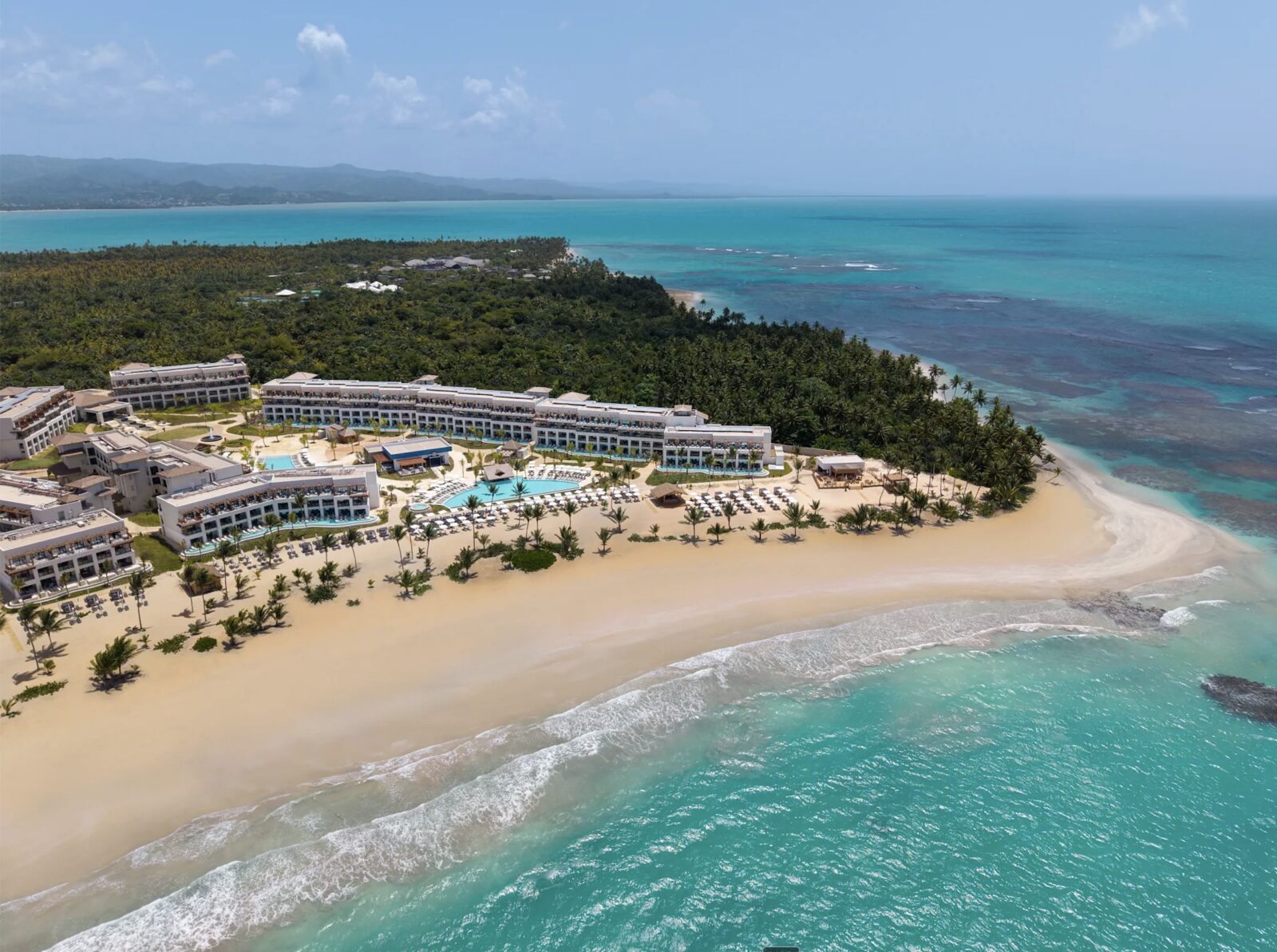
Because photos lie, and virtual tours lie by omission. A resort's marketing photos are shot by a professional at the best light of the year using the best angle on the best day. That's not a criticism — it's their job. But that photo is not what your ceremony space looks like at 4:30pm in August with the sun overhead and the wind coming off the water in a way that would blow a hairstyle sideways. A site visit is the only way to know.
When you go in person, you're not just checking that the beach is pretty. You're feeling the atmosphere. You're seeing where the servers stage, where the sun actually sits at ceremony hour, where the neighboring resort's noise carries from, whether the "private" ceremony spot is actually visible from a public pool deck, whether the walk from your suite to the aisle involves a service road, and how the property handles a light rain shower. Every one of those details shapes your day, and none of them show up in the brochure.
You're also meeting the humans. Your on-site wedding coordinator, the banquet manager who'll run your reception, the florist your resort partners with, sometimes the catering chef. Ten minutes of face time with the person who'll actually run your day changes the entire dynamic of the planning that follows. Emails get answered faster. Requests are taken more seriously. You stop being "a wedding file" and start being a real couple they've met.
Most all-inclusive resorts running destination-wedding groups offer discounted or complimentary preview stays for the couple, usually two to four nights, that include a formal site inspection, tastings, and a meeting with the coordinator. Ask your travel advisor to arrange one. If you can only manage a long weekend, do the long weekend. A few days on-site 9 to 15 months before the wedding is one of the highest-return decisions you can make.
And if you're wondering whether skipping this step is really that common: it is. Industry surveys of couples planning weddings abroad consistently show that more than half either have booked or plan to book their venue without seeing it in person first. So if you're feeling weird about "needing" a site visit, know that you're not being extra — you're just choosing to be in the more careful minority that ends up with far fewer day-of surprises.
What questions should you ask a venue during a site visit?
A site visit only pays off if you show up with the right questions. It's easy to spend three days on property, drink a lot of piña coladas, admire the beach, and fly home without pinning down the answers that actually matter for your wedding day. Bring a written list, and don't leave until you have real answers — not "we'll figure that out closer to the date" — on each of the following:
- Noise curfews and sound restrictions: what time does amplified music have to end at your ceremony and reception spaces, and does that time change depending on the venue (beach vs. ballroom vs. rooftop)? Many resorts have hard 10pm or 11pm outdoor cutoffs that couples don't hear about until final planning.
- Backup indoor space — specifically: exactly which room becomes your ceremony if it rains, what its capacity is, whether it's blocked for your date or shared with other events, and whether moving to it costs anything extra. "We have a ballroom" is not an answer. "The Coral Room, up to 80 seated, held for your date, no move fee inside 24 hours" is.
- Outside vendor fee policies: if you want to bring in an outside photographer, florist, DJ, or officiant, is there a day-pass or vendor fee per person, and what does it include? Some resorts charge $300–$800 per outside vendor per day and don't advertise it up front.
- Real weather history for your season: ask the coordinator for the honest track record of ceremonies moving indoors during the month you're targeting. Locals know. "Late September is usually dry by 4pm" is the kind of ground-truth answer you cannot get from a weather app.
- On-site coordinator responsiveness and handoff: who is your point of contact from now until the wedding, how quickly do they respond to email, and — critically — do you keep the same coordinator all the way through, or do they hand you to a different on-site lead 30 days out? Handoffs are where details fall.
- Group room-block terms: deposit per room, guest payment schedule, cancellation windows, complimentary-night thresholds, and how unsold rooms come off the block. This is the fine print that determines whether the trip is affordable for your guests, not just for you.
- Ceremony start-time flexibility: can you actually get married at 4pm or 5pm for good light, or does the resort only offer certain slots? Some properties limit ceremonies to earlier windows for operational reasons and won't volunteer that until you're locked in.
Take notes in the moment, in writing, and email a recap to your coordinator the day you fly home confirming what they told you. That written trail is what protects you eleven months later when a policy shifts or a new coordinator inherits your file.
Mistake 2 — What's a good decor backup plan if it rains at a destination wedding?
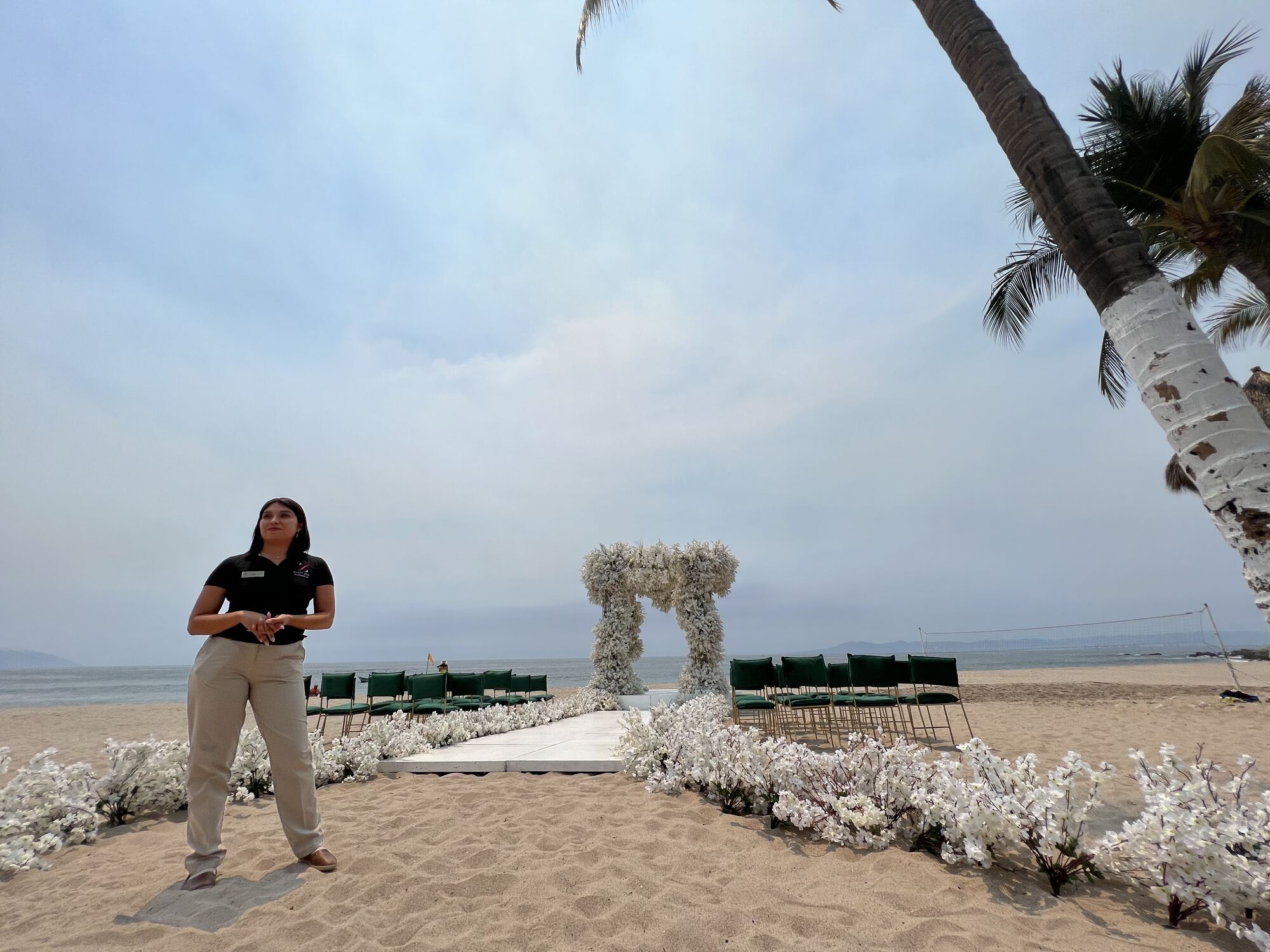
The mistake isn't planning an outdoor ceremony. Everyone does that, and beach and garden ceremonies are gorgeous — according to The Knot's Real Wedding Study, roughly 58% of couples host their ceremony outdoors, so this is genuinely the majority experience, not a fringe choice. The mistake is designing decor that only works outdoors — and then discovering, the morning of, that a tropical rain system is parked over the resort for four hours and you're being moved indoors to a ballroom that looks like a conference room compared to your beach setup.
That 58% number matters because it reframes the backup plan conversation. A real weather contingency isn't a niche worry for unlucky couples — it's a decision the majority of couples need to make and most of them skip. If you're planning outdoors, you're in the group that most needs a serious Plan B, not the group that can hope for the best.
The rainy-season truth: in Mexico, the Caribbean, and Costa Rica, afternoon showers during the green season are not a rare event, they're the daily forecast. Even in dry season, a passing squall on your ceremony day is entirely possible. Every couple planning outdoors needs a genuine indoor backup — not "we'll figure it out," but a specific room, a specific setup, and decor that reads well in both spaces.
The way to do this without doubling your florals budget is to choose decor that travels. Freestanding floral arches move indoors intact. Candles, lanterns, and string lights look intentional in a ballroom and dreamy on a beach. Loose petals, romantic table runners, and greenery garlands work in either setting. What doesn't travel well: a tightly staged beach installation with sand-planted torches, hanging cabana drape, or seating chart signage designed for a specific outdoor stretch. If your entire design concept depends on "the ocean behind us," a rain-day move guts the ceremony aesthetically.
Should you just pick a covered ceremony location from the start?
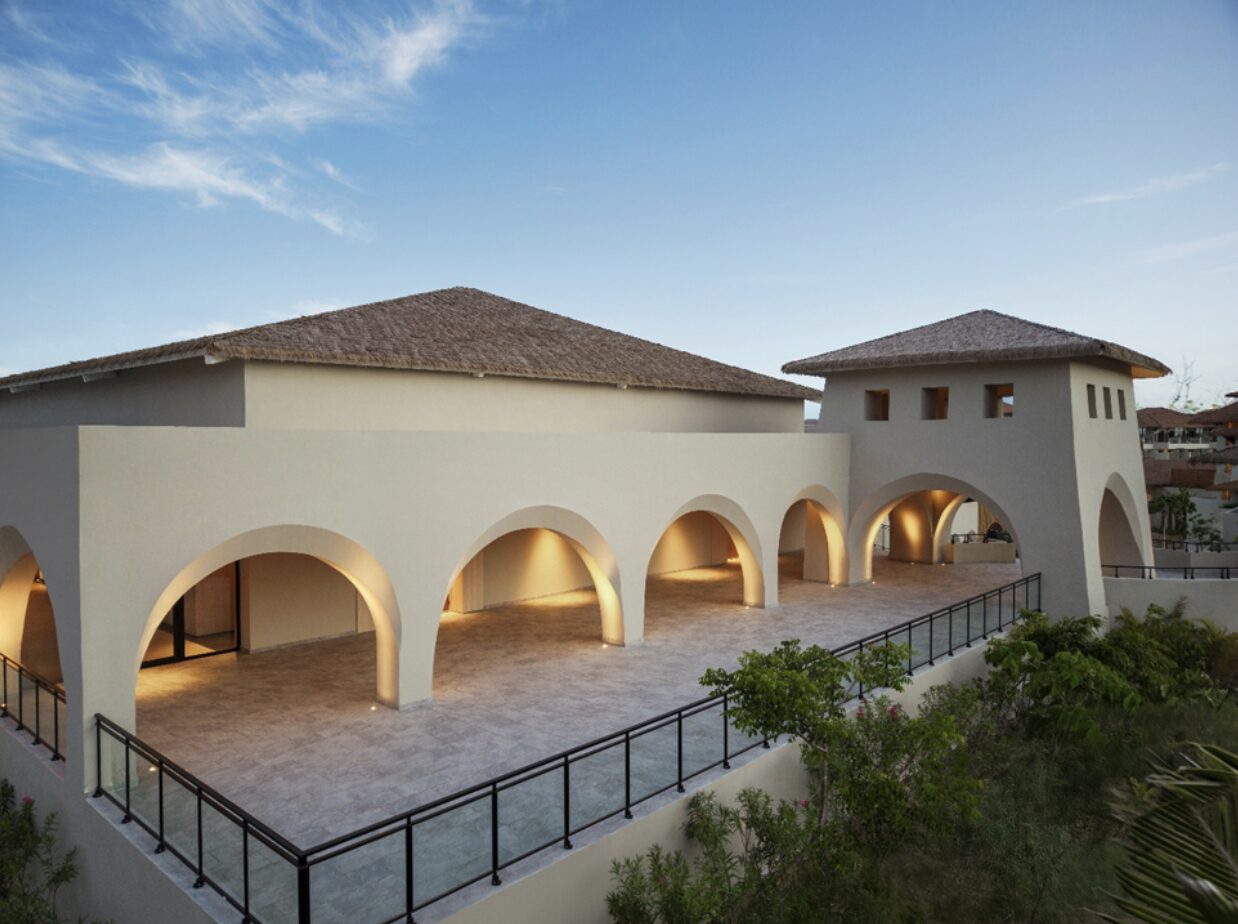
Honestly? For a lot of couples I plan for, yes. Especially couples marrying in green season or on a resort with a stunning covered option — a terrace under an oceanfront pergola, a rooftop with a permanent canopy, a garden gazebo, a chapel with open sides — a covered venue delivers the outdoor feeling without the anxiety.
The mental math I walk couples through is this: how much of your ceremony vision is genuinely about being outside, versus how much is about the resort being beautiful? If it's the second one — and most of the time it is — a covered space in a stunning setting will feel exactly as romantic as an open-air beach ceremony, minus 100% of the rain-day drama. You get to plan one decor concept, one seating chart, one processional path, and sleep the night before knowing exactly what your ceremony will look like.
The couples who genuinely need an open beach ceremony are the couples for whom the ocean itself is the point. That is a real, valid preference — and if it's yours, plan for it, build the backup, and trust the coordinator to call the move early enough that decor can flex. Just don't accidentally end up outdoors by default because you never asked whether a covered space was on the table.
Mistake 3 — How do you actually communicate travel details to guests?
This is where I watch the most avoidable stress come in, and it's the one couples underestimate the hardest. They think that once they've reserved a group room block and told everyone the resort name, the guest logistics work is done. It is not done. It has barely started.
The gap between "the couple booked hotel rooms" and "the guests know how to actually get to and through this trip" is enormous. Guests don't know which airport to fly into, or which resort transfer to use, or whether the resort shuttle needs to be pre-booked. They don't know if the arrival day has a welcome party they should aim to make. They don't know if they can wear the same dress twice or need a different look for each event. They don't know how much cash to bring, whether their phone will work, or which emergency number to text if their flight lands late and their transfer disappears.
The fix is a written travel guide, sent out with (or shortly after) invitations, and duplicated on your wedding website. It should live in one place, be printable, and read like a friendly briefing — not a legal document.
- Airport & arrival: which airport, recommended arrival day, how the resort transfer works, and how to reach a real human if things go sideways at the airport.
- Room block details: how to book inside the group, deposit amount, monthly payment schedule, final payment date, and the advisor's contact info.
- Week-of schedule: every event, with day, time, location within the resort, dress code, and whether it's plus-one welcome or not.
- What to pack & what's included: the all-inclusive category, whether excursions cost extra, currency notes, tipping guidance, and any dress-code specifics for the ceremony or a themed welcome party.
- Emergency contacts: the on-site coordinator's name, the travel advisor's name and phone, and — please — not the bride's cell as the emergency number for 60 guests.
Send this document at least six months out for a destination wedding, ideally earlier. Then update it as things solidify and re-send the final version 30 to 45 days before departure. Guests will read it. Guests will thank you for it. And your inbox will not drown in "quick question" emails the week before you fly.
For a deeper walkthrough of exactly what to tell guests and when, see what to tell your wedding guests and the destination wedding planning timeline.
How early should you start planning to avoid these mistakes?
Twelve to eighteen months is the sweet spot for most destination weddings, and 15 to 24 months if you have a big or budget-mixed guest list. That runway isn't for the couple — the couple could theoretically plan a destination wedding in six months. The runway is for the guests, and for the site visit, and for the decor decisions, and for the travel guide, and for every one of the three mistakes above to have room to be avoided rather than just discovered.
A rushed destination wedding is where all three mistakes compound at once. You skip the site visit because there's no time. You pick a resort based only on photos. Decor gets locked in without a real backup because you're already behind on invitations. Guests hear about the trip four months out and either can't afford it or can't get the time off, and now RSVPs are coming back light. None of that is a failure of love. It's a failure of runway.
If you want to see how the whole timeline actually maps out month by month, my destination wedding planning timeline walks it through in detail. And if cost is a driver of the pace, the real cost breakdown and the hidden costs post are the two I'd read next.
Shanna's Final Take
Destination weddings aren't fragile. They fail in predictable, boring, entirely preventable ways. Couples who visit the venue in person, design decor that works indoors and out, and communicate travel logistics like they respect their guests' time and money — those couples almost always end up with the week they pictured. Couples who skip any one of those three usually end up on a phone call with me two weeks before the wedding trying to fix something that didn't have to break.
None of the three mistakes above cost more money to avoid. They cost earlier decisions and a slightly less shiny attitude about what a resort website is showing you. Go see the property. Design decor with a Plan B. Write your guests a real travel guide. That's the whole game.
Honest verdict
- Best for
- Couples 9–18 months out from the wedding who are willing to make a site-visit trip, plan decor with a rain-day version, and put guest logistics in writing early.
- Not ideal for
- Couples who are booking a venue sight-unseen based on marketing photos alone, or who want to leave decor and guest communication as day-of decisions — the compounding stress of that path is where most destination-wedding regret actually comes from.
- What I'd choose instead
- A resort that offers a discounted preview stay 9–15 months out, a decor concept that reads well in both the outdoor and covered ceremony space, and a written guest travel guide sent six months before departure and refreshed 30–45 days out.
Frequently asked
How far in advance should you visit a destination wedding venue in person?
Aim for 9 to 15 months before the wedding date. That window is late enough that you've narrowed to a real short list of resorts and dates, and early enough that if the site visit changes your mind about the property, you have time to pivot to a different resort before invitations go out. Most all-inclusive resorts running wedding groups offer discounted or complimentary preview stays that bundle a formal site inspection, a menu tasting, and a meeting with the on-site coordinator — ask your travel advisor to arrange one rather than booking the trip on your own.
What decor works well as a backup for a rainy destination wedding day?
Choose decor that travels well between your outdoor and indoor ceremony spaces. Freestanding floral arches, candles, lanterns, string lights, greenery garlands, loose petals, and neutral table runners all read beautifully in either setting. Avoid designs that depend on a specific outdoor feature — like a beach view directly behind the aisle, sand-planted torches, or cabana drape sized to a specific stretch of shoreline — because those elements can't move indoors intact. A florist who has designed for the resort before can tell you exactly which pieces flex and which don't.
Is it better to just pick a covered ceremony location from the start?
For a lot of couples, yes. If your ceremony vision is really about the resort being beautiful rather than being literally outdoors on a beach, a covered space — a terrace under an oceanfront pergola, a rooftop with a permanent canopy, a garden gazebo, an open-air chapel — delivers the outdoor feeling with none of the rain-day anxiety. You plan one setup, one seating chart, one processional path, and sleep the night before with certainty. Couples who genuinely need an open-air beach ceremony should absolutely plan one, but should not end up outdoors by default just because they never asked whether a covered venue was on the table.
How do you communicate travel details to destination wedding guests?
In writing, in one place, at least six months out. Build a written travel guide — sent with or shortly after invitations and mirrored on your wedding website — that covers airport and arrival day, resort transfer instructions, room-block booking and payment schedule, the full week-of event lineup with times and dress codes, packing and all-inclusive notes, and real emergency contacts (the on-site coordinator and travel advisor, not the bride's cell). Update it as details firm up and re-send the final version 30 to 45 days before departure. Guests read it, and it eliminates most of the last-minute panicked questions.
How early should you start planning a destination wedding to avoid these mistakes?
Twelve to eighteen months is the healthy planning window for most destination weddings, and 15 to 24 months if you have a large or budget-mixed guest list. That runway is what makes the three big mistakes avoidable rather than inevitable: it leaves time for a proper site-inspection trip, thoughtful decor decisions with a real backup plan, and a written travel guide sent to guests far enough in advance for them to actually prepare. Shorter timelines don't automatically fail, but they force couples to skip exactly the steps that prevent stress later.
What should you ask your resort about weather contingency plans?
Ask three specific questions and don't accept vague answers. First, exactly which indoor space becomes your ceremony if it rains — by name — with confirmed capacity for your guest count and a written note that it's blocked for your date. Second, who makes the call to move indoors and by what time (most coordinators need a decision 3–4 hours before the ceremony to reset the space). Third, whether the move costs anything: some resorts charge a re-setup fee or a room-rental fee for the backup space that isn't disclosed until it's needed. Also ask the on-site coordinator for the honest local track record of ceremonies moving indoors during your target month — they know, and it's the most reliable weather signal you'll get.
How much does a destination wedding venue site-inspection trip typically cost?
For couples booking through a travel advisor with a group room block, most all-inclusive resorts offer discounted or complimentary preview stays for the couple — often 2 to 4 nights at a reduced rate or fully comped, depending on the size of the group being planned. Out-of-pocket, couples typically spend on flights and any incidentals, so a realistic all-in cost for a US-based couple is often in the $600–$1,500 range for the trip once resort discounts are applied. It's one of the highest-return line items in a destination-wedding budget: a few hundred dollars up front to avoid five-figure regret about a venue that photographed better than it lives.