Why couples ask a family friend to officiate in the first place
A family friend officiant is one of the most personal choices you can make at a destination wedding. They know your story. They can name the moment your parents met your partner. They can say the thing a hired officiant can't, because they were there for it.
That's the upside. The downside is that most people saying yes have never written or led a ceremony before, and the pressure of doing it well in front of 40 to 100 people you both love is real. I've had officiants freeze on the aisle. I've had officiants lose the script in a beach wind. I've had officiants deliver a ceremony so good the couple's parents still talk about it 5 years later. The difference between those outcomes is preparation, not talent.
The do's and don'ts below are the pattern I've watched work across the destination weddings I've run in Mexico, Jamaica, Costa Rica, and the Dominican Republic. Weave these into your planning early and the family-friend officiant becomes the emotional high point of the day. Skip them and it becomes the part your photographer edits around.
Do the legal ceremony at home first
Before anything else about the family-friend officiant question: handle the legal marriage at your home courthouse before the trip, and let the destination ceremony be symbolic.
This changes the entire risk profile. A symbolic ceremony has no legal requirements. Your family friend doesn't need to be ordained, doesn't need to file paperwork in a foreign country, and doesn't need to speak the local language. They just need to lead a ceremony that feels right. I cover the legal side in detail in this legal-requirements post, and it's the single decision that gives couples the most flexibility on who officiates.
The vast majority of destination weddings I book use this structure. Courthouse first, symbolic ceremony at the resort. The wedding video and the anniversary date are the destination day, always. The paperwork just already got settled at home.
Choosing the right person: who says yes matters more than who's closest
The first mistake I see: couples pick the person they love most, not the person best suited to lead a ceremony. Those are sometimes the same person. Often they're not.
Do pick someone who's already comfortable speaking in front of a group. If they got emotional during a 2-minute toast at your engagement party, standing at the front of a ceremony for 20 minutes is going to be harder, not easier. Warm people can still make great officiants, but they need extra rehearsal, not just faith.
Do pick someone with a valid passport and the ability to commit to every wedding-week event, not just the ceremony. A destination wedding officiant needs to be on the ground for the rehearsal, which is usually the day before. If their travel calendar is tight or their passport expires within 6 months of your wedding date (a common issue that blocks entry to several countries), you'll find out at the worst possible moment.
Do pick someone you trust not to cancel. This sounds obvious. It matters more at a destination wedding than at a home wedding because there's no backup plan you can pull together in a week from 2,000 miles away. If your officiant drops out 30 days before the wedding, you're calling the resort's default officiant, which is fine, and losing the personal touch that made you ask in the first place.
Don't pick a family member who's still processing anything complicated about your relationship. If a parent or sibling has been quietly cool about the wedding, asking them to officiate isn't going to fix it. It's going to put the tension on stage. Save that person a different, honored role (a reading, a toast at the welcome dinner) where the pressure is lower.
Don't pick someone just because they got ordained online for a friend's wedding 4 years ago. That was one ceremony. Yours is different, and internet ordination is legally irrelevant at a destination wedding anyway once you've handled the courthouse paperwork at home.
Preparing the ceremony script: co-write it, then proofread it
The biggest single reason family-friend ceremonies go sideways is the couple assumed the officiant knew how to write one. Most people don't. Handing a beloved friend a blank page and saying "just make it personal" is how you end up with 8 minutes of inside jokes, 3 minutes of nervous throat-clearing, and a couple crying for reasons unrelated to love.
Do co-write the script with them from the start. I recommend a working document you both edit in the same file, with a rough outline agreed on inside the first month: welcome, brief opening remarks about the couple, readings (if any), vows, ring exchange, pronouncement, closing. Google Docs works. Anything shared works.
Do share 3 to 5 specific stories that show your bond and values, not vague memories. "He waited outside my apartment in the rain the night my grandmother died" is a story. "He's always been there for me" is filler. Specific stories are what make a family-friend ceremony better than a hired officiant's, and they only exist if you hand them over.
Do have someone proofread the final script. Ideally your planner, your maid of honor, or a friend who's a strong writer. Fresh eyes catch odd phrasing, awkward transitions, and the one line that reads fine on paper but sounds strange spoken out loud. Every family-friend ceremony I've watched hit the mark had at least 2 rounds of proofreading before the trip.
Don't let your officiant wing it. I mean this literally. No matter how confident they are, no matter how many toasts they've given, do not let them show up without a printed, page-numbered script. Beach wind, stage nerves, and 80 people watching are a different environment than a rehearsal dinner living room.
Don't over-write it either. Total ceremony length should land between 20 and 30 minutes for a symbolic ceremony. Any longer and guests standing in humidity or seated in direct sun start to fade, and the emotional high point (usually the vows) hits when attention is already gone. Cut the script by 20% after the first draft. It will read better every time.
Watch: what a symbolic ceremony actually looks like
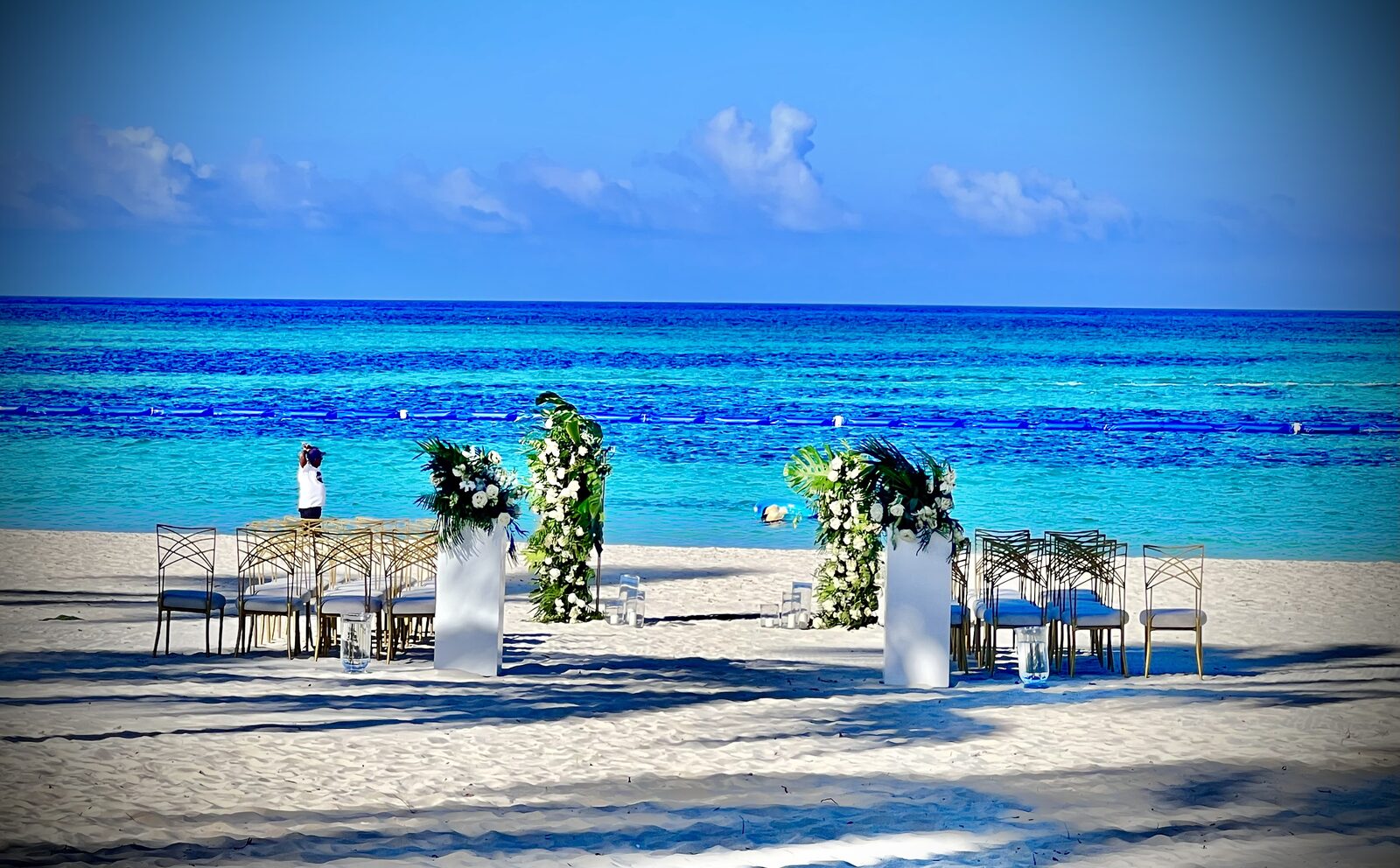
Here's a quick look at what a symbolic destination ceremony feels like at the resort itself, which is useful context for the officiant when they're picturing where they'll be standing and how the setup flows.
Rehearsal: run the whole thing, not just the walk-down
Do a full, out-loud rehearsal with your officiant. Not a walkthrough of the aisle. The whole ceremony, script in hand, from opening line to pronouncement, at least once. Twice is better.
The rehearsal is where the awkward parts surface. Sentences that read fine on the page sound wrong out loud. Transitions between the officiant and the readings feel choppy. Ring exchange cues get lost. The moment when the officiant asks for the rings and the ring bearer isn't ready shows up in rehearsal, not on the wedding day, only if you actually rehearse it.
At most destination weddings, the resort's onsite wedding coordinator runs a rehearsal the day before, usually 45 minutes to an hour. That's your window. Bring the final printed script. Time the whole thing with a stopwatch on your phone. If it's over 30 minutes, cut. If your officiant is nervous, do a second private read-through in your suite that evening. The confidence they gain from having said the words twice before the ceremony is enormous.
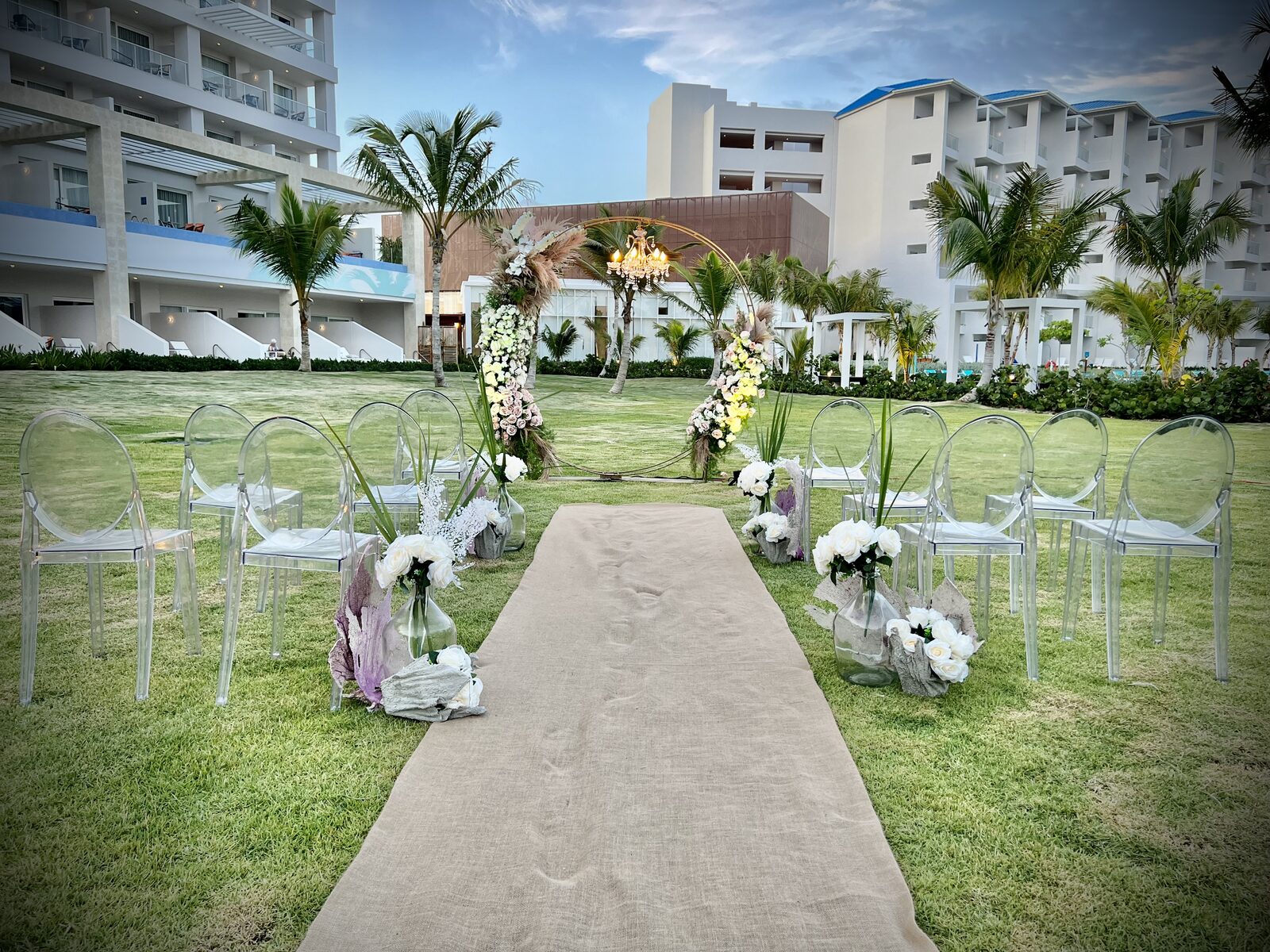
Do research the venue setup with your officiant before the rehearsal. Where will they stand relative to the couple? Where does the microphone live? Is it a lapel mic (best for beach and outdoor ceremonies), a handheld mic (fine indoors, wind-sensitive outside), or no mic at all (fine for 20 guests, unworkable for 60)? Every resort I work with can accommodate a lapel mic. Ask for it by name.
Don't assume the officiant knows the ceremony rules for the venue. Some resorts allow candles, some don't. Some require the ceremony to end by a specific time (usually 4:30 or 5pm) to clear the venue for the next event. Some restrict live music during the vows. These are things the resort coordinator will tell you at the site visit, and every restriction should get communicated to the officiant in writing at least 2 weeks before the wedding, not the morning of.
Day-of announcements: put them in the script, not the officiant's memory
Don't rely on your officiant to remember the announcements. Put them in the script, in bold, at the exact moment they're supposed to be said.
Common announcements that need to land during the ceremony: unplugged ceremony request ("please keep phones and cameras down so our photographer can do their job"), guest movement instructions ("after the pronouncement, please stay seated for family photos"), and any cultural or family-specific rituals with cues the officiant is responsible for calling.
The unplugged ceremony ask is the most commonly missed one. If it matters to you, it goes in the script before the processional starts, and it gets a second mention printed on the ceremony program (or a small welcome sign at the aisle). Guests need to hear it. If your officiant remembers it at the last second and adds it as an aside, half the room misses it and your professional photos are full of iPhone screens.
Do also include the pronunciation of any names or place-names the officiant might trip on. A phonetic spelling in parentheses next to the name in the script ("Siobhan (shiv-AWN)") saves the moment. Grandparents' names, deceased family members being honored, the couple's home city, wedding venue names in another language: all worth pronouncing right on the first attempt.

Watch: a real ceremony moment from the officiant's angle
Here's another quick look at how the officiant's role plays out during the day, and how the guest energy shifts once the ceremony starts. If you're picking an officiant, showing them a clip like this is a low-pressure way to help them picture the moment.
Don't overload your officiant with side tasks
The tradeoff nobody warns couples about: the closer the officiant is to you, the more likely you are to ask them for other favors during the wedding week. Don't.
The officiant's only job on the wedding day is the ceremony. That means they aren't the person coordinating the ring bearer, greeting late guests, cueing the DJ, or running back to the suite to grab the vow books you forgot. Every extra task raises the odds they arrive at the ceremony flustered, and it shows in the delivery.
This applies double at a destination wedding, where the officiant is also a guest managing their own travel, room, welcome events, and downtime. They still want to enjoy the trip. They didn't sign up to be an unpaid coordinator.
If you find yourself wanting extra help on the day, delegate to a bridesmaid, a groomsman, or a paid day-of coordinator. Most of our destination weddings include a resort wedding coordinator whose entire job is exactly this: keeping the day moving, cueing vendors, and handling small fires. Your officiant should be visible in 2 places that day: standing at the front of the ceremony, and holding a cocktail at the reception.
For couples navigating tricky family dynamics around the wedding party (divorced parents, stepparents, blended families), the officiant question is often tangled up in bigger questions about roles and inclusion. I cover the wider family-dynamics side in this family-dynamics post. Deciding who officiates and how you honor everyone else works better when the whole role map is settled together, not one favor at a time.
After the wedding: thank them well
A family friend just prepared for and led one of the most emotional moments of your life, for free, on a trip they paid to be part of. A thank-you note counts. A small, meaningful gift counts more.
The gifts I've seen land well: a framed print of them mid-ceremony from the wedding photographer, a bound copy of the ceremony script itself, a nice bottle of whatever they actually drink (not what you think they should drink). Cash tips aren't traditional for family-friend officiants and can feel awkward. A gift that references the ceremony they led always feels right.
One more thing worth naming: the officiant is one of the people most likely to be asked to speak or officiate again for your friend group in the years after your wedding. If they nailed it, tell them. Word travels, and your endorsement is the kind of thank-you that keeps giving for a while.
Shanna's Final Take
The couples I've seen have the best family-friend officiant experience share 3 habits. They asked early (6 months minimum, ideally 9 to 12 for a destination wedding). They co-wrote the script with the officiant instead of handing it off. They kept the officiant's day-of role to the ceremony and nothing else. The couples who skipped any of those steps almost always tell me afterward it's the part of the day they'd redo if they could.
A common planning mistake I see: couples treat picking the officiant as one of the last decisions instead of one of the first. It's a first-quarter decision, before you send save-the-dates and before you write the ceremony program. I cover a wider set of planning mistakes in this common mistakes post, and the officiant question sits inside that broader pattern of leaving high-stakes personal decisions too late.
Honest verdict
- Best for
- Couples doing a symbolic ceremony at their destination (with the legal paperwork already settled at home) who have a family friend or family member with a valid passport, real speaking comfort, and the calendar to commit to every wedding-week event. Also strong when the couple can lock in the officiant 9+ months out and co-write the script over a real timeline instead of a last-minute scramble.
- Not ideal for
- Couples on tight timelines (under 4 months), couples whose likely officiant is nervous about public speaking or hasn't done anything similar before, and legally-required-in-country ceremony destinations where an outside officiant adds paperwork instead of removing it. Also a poor fit when the couple is still deciding on family roles: piling officiant duties on someone whose role is politically loaded raises the stakes on the ceremony itself.
- What I'd choose instead
- For couples wanting a personal touch without the pressure of writing a full ceremony, ask the family friend to give a reading or lead a single ritual (unity ceremony, sand blending, hand-fasting) inside a ceremony led by the resort's default officiant. You get the personal moment without the 20-minute solo lift. For couples who want the whole ceremony professionally led but still feel personal, most resorts offer an officiant upgrade (usually $200 to $500) where the couple meets the officiant beforehand and shares personal details for the script. It's a strong middle option.
By Shanna Fowler, Certified Destination Wedding Planner and Travel Advisor.
WorldWide Destination Weddings is a niche division of WorldWide Travel Team, founded by Shanna Fowler and Ted Zinselmeier. We help couples plan all-inclusive destination weddings in Mexico, Jamaica, Costa Rica, the Dominican Republic, and beyond, with expert resort guidance, room block support, and guest travel logistics.
Frequently asked
How far in advance should we ask a family friend to officiate a destination wedding?
Minimum 6 months. Ideally 9 to 12 months. A destination wedding officiant needs time to check their passport (renew if within 6 months of expiration), commit to the full wedding-week calendar (rehearsal, welcome events, ceremony, farewell brunch), and co-write a real ceremony script with you over multiple rounds. Asking 3 months out is workable but rushed. Asking 4 weeks out leaves no room for rehearsal, proofreading, or the officiant to back out gracefully if their circumstances change.
Does a family friend need to be legally ordained to officiate a destination wedding?
For a symbolic ceremony, no. Legal ordination has no bearing on a symbolic destination ceremony because the legal marriage is settled at your home courthouse before the trip. For a legal in-country ceremony (rare and paperwork-heavy in most Latin American and Caribbean destinations), the local government usually requires a licensed local officiant, not a foreign family friend, regardless of ordination status. In practice, 90%+ of destination weddings I run use a symbolic ceremony structure, which removes the ordination question entirely.
What should be in the ceremony script for a family friend officiant?
A working template: welcome and thank-you to guests (1 to 2 minutes), brief remarks about the couple with 2 or 3 specific stories (3 to 5 minutes), optional readings by other guests (1 to 3 minutes each), vows (personal or traditional, 3 to 5 minutes), ring exchange with clear cues, pronouncement, and closing. Total target: 20 to 30 minutes. Print the full script in a large readable font, page-numbered, with the officiant's stage directions in italics and the important announcements (unplugged ceremony, etc.) in bold at the exact spot they're supposed to be said.
How long should a destination wedding ceremony last with a family friend officiant?
20 to 30 minutes total is the sweet spot for a symbolic destination ceremony. Under 15 minutes feels rushed for guests who traveled to be there. Over 35 minutes tests the attention span of guests standing in heat or seated in direct sun, and the emotional payoff of the vows lands worse when energy has dropped. The cleanest ceremony pacing I see: 2 minutes welcome, 5 minutes couple's story and remarks, 3 to 5 minutes vows, 2 minutes ring exchange, 1 minute pronouncement, done in 15 to 20 focused minutes. Add a reading or a ritual (sand ceremony, unity candle) and you're at 25.
What if our family friend officiant backs out at the last minute?
Every destination resort I work with has a default officiant available on short notice. It's not the personal ceremony you planned, but it's a real backup. The strongest protection against last-minute cancellation is picking someone reliable in the first place and confirming their travel is booked (flights, hotel room inside your group block, passport valid through 6 months past the wedding date) at least 60 days out. If a cancellation does happen, the resort's onsite wedding coordinator can hand your script to their default officiant with 48 hours' notice and the ceremony still runs. The personal touch is what's lost, not the ceremony itself.